

I set a boundary and I will not apologize for it, here’s why: I will never abandon myself to make someone else comfortable. The reality is this…
Life is going to hurt you. Sorry to bust the comfortable bubble of denial, but ready or not, it’s coming for us all.
People will disappoint you, let you down, leave you, betray you and hurt you in ways that are entirely unfathomable, and if you’re really lucky, they will only do it unconsciously and unintentionally.
The ones you love and care about the most will hurt you the most because they have the capacity to do so.It’s part of the deal that comes with the territory of opening up to someone so deeply.
Vulnerability allows you to experience incredible depths of connection and profound love. The ability to be vulnerable with another establishes layers of openness and honestly that create meaningful intimacy as well as foundational trust.
But vulnerability also makes you vulnerable. It’s a connection with risk where you are susceptible to becoming wildly exposed to hurt and harm. You offer vulnerability sincerely, with a desire for reciprocity, but such emotional risks are not without cost. And often, you pay that cost.
In fact, the price of love is always pain. Life is a practice of surrender and letting go.
The things you love will someday leave you. Not maybe, but definitely.
This grim truth is not meant to depress or deter you, but a reminder to be present with what you have while you still have it.
To love fully, deeply, truly; despite all the complications of relationships.
To let things exist in their imperfection, including yourself.
Because one day, be it five, ten, fifty years from now, you will look back at this moment and wish you could return to it, exactly as it is.
But you can’t.
All you will have is the memory of who you were at that time and how it felt.
And you will reflect either with gratitude, knowing you appreciated it, or with regret, knowing you spent your time trying to make it something else instead of seeing the complicated beauty of what it was.
Perfect in its perfectly flawed way.
Which is exactly what made it uniquely yours. Memorable. Special.
May you have the courage to acknowledge all that is well in your life, and to love it, unashamedly, boldly, openly, unapologetically. And may you also have the courage to let go of what is no longer good for you while you still have the opportunity to find what is.
Because the only promise is change. Not only in circumstances, but in how we feel, relate, and reflect.
May you have the courage to love your life, even and especially when, to all outward appearances, it feels the least lovable. Because it is precisely then that you come to understand the value of this one beautiful life.
This doesn’t mean do not love, in fact, quite the opposite. For life is nothing but grey without the brilliant colors of love. It means find the things worth loving, and loving them, even when it hurts. Especially then.
It’s about cultivating the discernment to choose who earns access to hurt you. That often means creating boundaries. It sometimes means letting go of people without boundaries, the ones who want access to your depth on their terms.
May you have the courage to choose love that is worth the pain, and the honesty to admit that not everyone is.
Many are. But you forget that you get to choose, so you stay in relationships longer than you should, attaching yourself to pain out of habit and history more than choice and desire.
You forget that love is not an excuse to endure suffering at the cost of someone else who consistently makes their pain your problem. Even when, especially when, it’s unconscious, it’s no act of nobility to allow a stream of hurt to be inflicted upon you simply because of proximity.
People who hurt you are not your charity work; they are your addiction to moral superiority at the expense of your self-respect. You call yourself compassionate but every time you absorb their hurt, you’re choosing the story of who you are over your own integrity and dignity. The role makes you feel noble, but tolerating abuse does not make you a saint.
A real saint understands that sainthood does not require self-erasure. A real saint can witness someone’s pain without absorbing it. A real saint does not use self-abandonment as virtue, let people hurt them, and call it love.
It’s no measure of love to tolerate harm from those you love. Simply because someone is hurting does not give them a pass to hurt you.
Choosing the right pain is choosing the right love. And you don’t know what’s right until you have learned what’s wrong. There are only two mistakes.
The first is believing that love is ONLY pain - that’s not love - that’s abuse.
The second is believing that you are not worthy or capable of real love. This is a common belief after the loss of unaligned love. The irony is the path to love starts with loving yourself, which is far more painful than anyone wants to admit.
Because really loving yourself requires you to look at all the ways you’ve been hurting yourself and allowing yourself to be hurt and pretending it was love.
It means facing the ways that you have been hurt as well as the ways that you have hurt yourself and others by believing love looked, sounded, and felt a certain way.
It’s painful because it means acknowledging all the love lost, all the opportunities gone and all the moments ruined by pain when they could have been love. That requires grieving, forgiveness, often anger, sometimes shame, but always, the commitment to let go. To live alongside, but not inside all the ways that love let you down and left you only with scars, chasing empty promises but always finding yourself in the shadows of love, instead of the spotlight of it.
And admitting this often makes you bitter.
Bitterness is the first honest, initial reaction to the hurt and harm by being overlooked, left, or rejected by those you love. Bitterness happens from the specific pain from a rupture in our prior investment. A stranger’s cruelty doesn’t strike you the same way.
Most people unconsciously stay in bitterness far longer than they should because they don’t allow themselves to be bitter.
You grew up in a world that told you bitterness was a personal failing and unattractive flaw. It is anger that hardens into confirmation of the truth you tried to deny: love is pain. Everyone eventually in their own way, will hurt you in ways you never thought possible.
Bitterness calcifies when the disappointment stops surprising you and starts confirming your expectations for hurt and harm as proof. It hurts the most with those you thought were the exception, but there are no exceptions to the rules of life: everyone and everything must go.
The paradox is the more you hold people to impossible standards or the more you avoid the uncomfortable truth, the more bitter you become when reality inescapably arrives.
Most people do not want to be bitter, many more believe they are not bitter yet move with the subconscious weight of heavy bitter baggage.
There is no shame in feeling bitter, but the danger happens when you shape an identity from the injury that hurt you instead of allowing the input to show you where you simply felt pain, and from it, how to get better.
The seduction of bitterness is being vindicated about something real. You begin to value being right more than being open to recalibrate and heal from the injury. The moment of being proven-right feels like clarity, even like winning, but it comes with the cost of a tainted world-view. It is both intoxicating, and very dangerous.
Bitterness is a trap that serves to justify overly rigid boundaries where kindness becomes suspicious, apologies become manipulation, and intimacy becomes performative. It’s an honest but flawed measure of self-protection and self-preservation that isolates you from the very experiences that can help metabolize bitterness into growth and connection.
The most painful part is when unacknowledged injuries not only make you bitter, but also make you the problem. The patterns of hurt that get glossed over and brushed off instead of allowed to exist with awareness to the harm caused are the most insidious kind because they are a double injury.
In addition to the pain they invoked, they are also layered with judgment for making others uncomfortable or even guilty.
Holding people accountable often comes with the territory of being misunderstood as the problem. Now you are the bad guy because you haven’t processed it, moved on, forgiven and grown the way everyone wanted you to. Your boundaries are mistaken for bitterness that becomes a display of your failure to heal, where it’s considered your choice to remain wounded.
When bitterness is justified, the world asks you to make a difficult choice: express the bitterness and be dismissed as stuck, dramatic, or difficult, or suppress it and let everyone believe a story that is not true. They want you to move past it without them having to validate that you had reason to be there in the first place.
Here, most people concede to what others want of them, and not what they feel honestly for themselves. But the moment you start doubting whether you’re entitled to feeling bad or bitter, whether you’re overreacting, or whether you should be over it by now, is the moment you start self-betraying.
Which is often how people move from bitterness as an event to bitterness as an identity, for once you start betraying yourself, you abandon your truth for a perception that taints everything through an increasingly bitter lens.
The cruel part is that bitterness isolates you because it’s justified. If it were petty or irrational, it would be easier to dismiss and move past. When bitterness is avoided, denied, and suppressed, it grows until it demands you acknowledge it, even if no one else will.
And so life asks you to choose what feels impossible: You can be right and alone, or you can be accepted and self-betraying.
Yet there is always a third door. Bitterness is unpaid debt you can alchemize into personal freedom through forgiveness. It’s also the catalyst to earning the invaluable skill of discernment.
Where feeling bitter initiates from pain of personal injury, it also invites the opportunity for developing earned emotional wisdom. Bitterness asks you to bring awareness to the transgression and allow that pain to pass instead of rushing to superficially transmute or alchemize it into a lesson. It asks you to admit that things are not okay, and to let it be uncomfortable without demanding you to accept what is unacceptable.
Real forgiveness - the kind that does not come with strings attached or superficial display - happens after you have allowed bitterness to exist, not before. Forgiveness can only be offered once you have forgiven yourself for being so vulnerable and trusting in the first place. Bitterness happens when you blame yourself for the patterns you ignored and the signs you dismissed.
Bitterness can transform into forgiveness once you stop needing the other person to change or apologize. It comes when the cost of holding on hurts you more than the cost of holding them accountable.
The tricky thing with both is that they reinforce an identity story about yourself that can put you on dangerous moral high ground as being the bigger person, which is its own kind of self-betrayal if you are performing magnanimity when you actually feel rage.
Effective forgiveness gives you space and permission to grieve. The loss of trust, respect, love, and even an entire relationship is worth grieving. You must not only grieve the loss, but also your attachment, dependency, and fear of emptiness after loss. Most of us do not know how to grieve. It’s very uncomfortable to stay with the sensation and allow it not only to exist, but exist without judgment or rush to resolution. Yet that is the only way for it to pass. Once you stop fighting it, analyzing it, or suppressing it, it is free to go.
Once you are unbound by bitterness and grief, you can more objectively observe the patterns of behavior and signs you missed so you can become more discerning. When you are still hurt, your hurt creates a bias that creates harsh boundaries that are reactive to your pain. Discernment is different. Discernment creates boundaries from a desire for self-respect, not in retaliation or removal of access.
Discernment is where experience becomes integrated wisdom. It helps you understand which boundaries are necessary and where to put them. It helps you define how to apply them and to whom without being rigid or malicious. Discernment is the difference between building boundaries instead of walls. It’s not punitive, nor does it require repair or acknowledgment but simply names reality and adjusts your behavior accordingly.
Yet even after offering forgiveness and creating discerning boundaries, people are not obliged to acknowledge either of them. This is an invitation to challenge your sincerity of both.
When people consistently fail to respect your boundaries, you have to decide if this is a relationship worth keeping. The same way that people are not obligated to respect your boundaries, you are also not obligated to owe anyone anything, including access to you.
If keeping the relationship requires you to abandon your boundaries, you’re not keeping a relationship but maintaining an arrangement where the other person gets what they need at your expense. Anyone who benefits from your lack of boundaries will not like when you develop them. Anyone who only loves you when access to you is on their terms, not yours, is not actually offering you love, but control in disguise.
You can fully forgive someone who never sought your forgiveness - you can even actively love them - but have no space for them in your future.
Boundaries are inconvenient because they require the other person to acknowledge and adjust their behavior. They also often require other people to validate and honor the new dynamic. And many people do not want to do that. Nor are they obliged.
Sometimes people who aren’t directly involved in your boundary start enforcing the boundary violation on behalf of the person you set the boundary with. It’s easier to brush off the boundary-setter as the problem than admit the uncomfortable truth that maybe this person has harmed them too, but they are not ready to see it, admit it, or heal from it. The truth is most people want to see the best in others even if it blinds them to their own pain. Often, anyone pressuring you to drop the boundary is showing you something about their own relationship to the person you’ve set the boundary with.
And the truth is also that it is not really your business because we cannot change anyone’s behavior, only our own. It would be nice if people supported you, especially those that you really love, because their refusal to honor your boundaries with others is betrayal of a different kind. But it’s also all an opportunity to get better instead of becoming bitter.
Better at recognizing patterns and acknowledging pain.
Better at allowing grief and learning how to forgive.
Better at becoming discerning and acting from self-respect.
Better at trusting yourself and honoring your truth.
Better at choosing yourself and choosing people who also choose you.
Because when you get hurt by someone and you both acknowledge that hurt, you are actively choosing love, and the inevitable pain that comes with it.
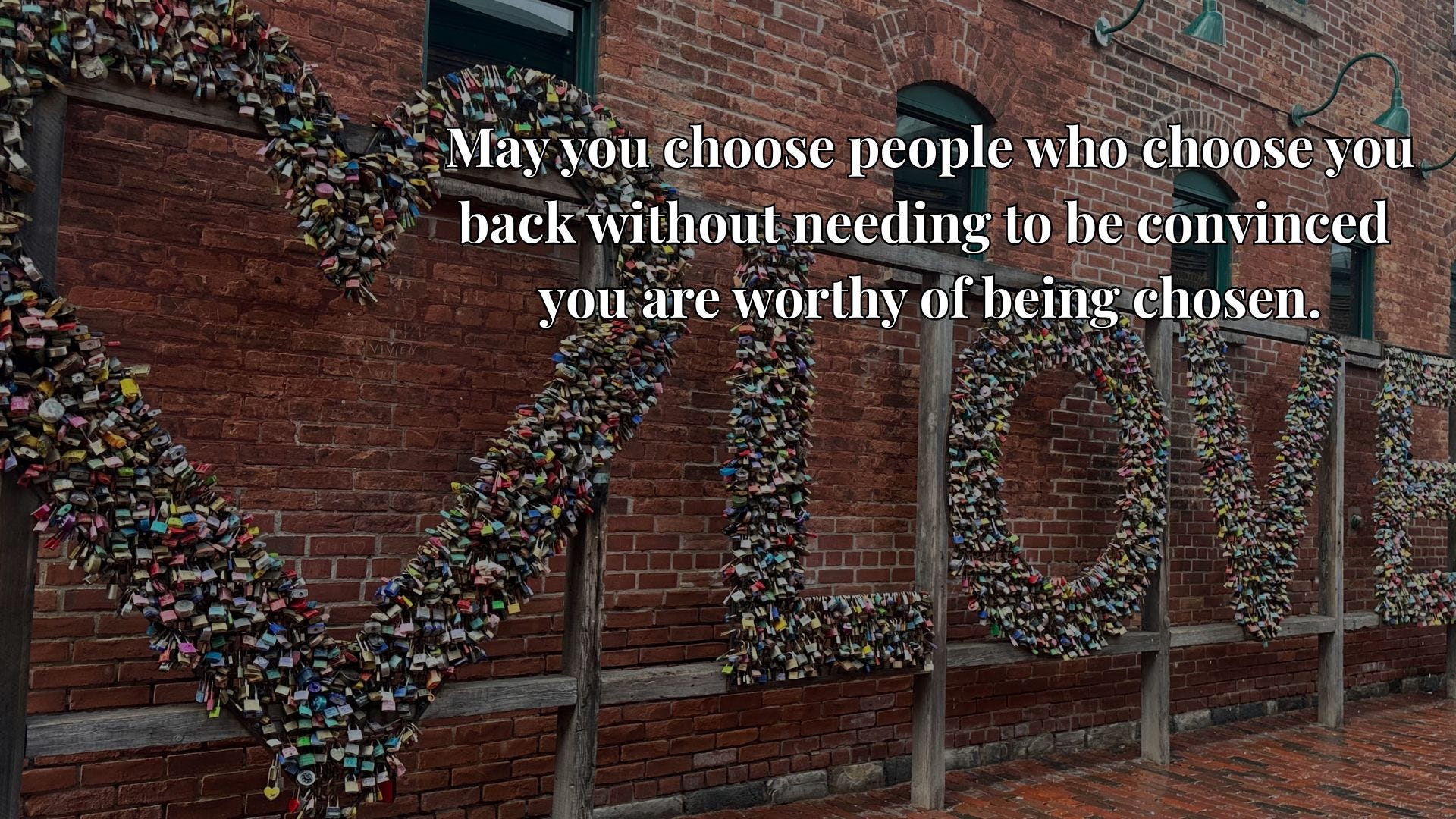
When you choose someone you are saying, “I choose your love and I choose your pain.” It also means choosing the painful self-reflection, behavior change, and personal growth that comes from acknowledging how you, too, inflict hurt.
Choosing love sends a message to your deepest self that says, “you are worth it.” It shows you that you are worth the vulnerable exploration into real trust, real connection, real growth, real love and all the pain that comes with the territory of being seen as your most authentic self.
And yes, it is scary, that’s why love takes so much courage. But only through love do we find our liberation.
In real love, the kind that doesn’t cling or demand or extort, we learn to love ourselves more wholly for who we really are.
Real love is not a need, but a choice. Something we want and desire, but do not require to validate our existence or value.
Real love is the vehicle by which we experience ourselves through others. Hopefully, we choose people that allow us to embody a pure, unrestricted, and forgiving essence of self-expression and not one that exists only in the identity of a martyr or embittered actor.
Real love is a witness to who we have the potential to be when we allow ourselves to be vulnerable enough to love and be loved, not despite the hurt and pain, but alongside it.
Real love sees you for who you really are, not how they wish you could be.
Real love is when you both decide, “I choose this, I choose you,” because even though it sometimes hurts, I choose this pain because it’s worth the price of love with you.
Real love asks us to choose over and over and over, way after opening ourselves to love, but in every moment after when the hurt is real and we have to ask: “do I still choose this?”
Real love is admitting that sometimes the answer is yes, sometimes it’s no, and sometimes it’s choosing the same love, but differently than we did before.
Real love is not absent of pain or even boundaries, and it never asks us to perform someone we are not just to maintain the illusion of something that’s changed.
The people who are worth it will choose this with you. The ones who aren’t will show you what happens when you choose a boundary.
And either way, you’ll know because you chose yourself first.
Learning to choose myself alongside you, SJT
For those brave enough to be the villain in someone else’s story so they can be the hero of their own. I see you, and I respect you.
Hello human reading this - I am a NEW writer and I want to get better at writing. If you actually read this and made it to the end ANY FEEDBACK - no matter how blunt or hard- is genuinely and truly appreciated.
I’m a professional bodybuilder so studying our weaknesses and working to make them strengths through specific criticism is my jam. I really want to improve my studying human impressions before asking the dreaded AI-bots. THANK YOU. 🙏🏻
If you like this, you may also like this (a personal fave), makes a good listen / mini podcast! https://wonday.substack.com/p/shock-absorption?r=c4p7h&utm_medium=ios