

“The unexamined life is not worth living.” — Socrates
A comfortable cage is still a cage.
There is nothing wrong with being in one, either. There are, in fact, many great advantages and practicalities. Safety. Predictability. The relief of having someone else set the terms.
But at some point, a question starts to hum, quietly at first, then with increasing insistence: Where does the cage end and where do we begin?
And is this the reason - the slow, imperceptible merger of self and structure - for the pervasive unease that so many of us carry? The decaying of something in the body and the mind that comes from watching life through an obstructed view instead of actually living it?
IT WAS ANOTHER AVERAGE TUESDAY
The alarm goes off. Then again. Then once more.
You are already behind, and you haven’t opened your eyes yet.
Coffee. Emails. The immediate gravity of everyone else’s needs pulling you vertical before you’ve had a single thought of your own. You move through what is while thinking about what’s next. You are already somewhere else without ever having been anywhere at all, and already, you are late for the version of yourself you’re supposed to be today. Who is that again?
You dress unconsciously, adorning layers of uncomfortable and ill-fitted textures to make an impression, for who?
Breakfast, if there is one, is an afterthought of undercooked toast, microwave oatmeal maybe, hurried mouthfuls between the rhythm of other morning tasks because sitting down would mean slowing down, and you can’t afford that yet.
The commute is noise: news, music, or maybe you’re already on calls before you formally clock in. You need the noise to override the quiet that keeps trying to say something that you just don’t have time for right now.
Work. The particular exhaustion of performing competence for people whose opinions you’ve somehow agreed to let determine your worth and all the low-grade irritation that comes with the territory of being a Functional Contributing Adult doing their part. By mid-afternoon, your brain checks out, but you push through anyway because that’s what you do. The stress lost its novel pressure long ago; in fact, it feels permanent now, like it’s become part of who you are.
Then home. The kids, the dinner, the partner you love but aren’t quite seeing tonight, not really, there’s a wall up, and you’re not sure when it appeared. You watch it all from the other side of the plexiglass that wraps like a smudged film around your mind. You meant to be present. You meant to ask how their day was and actually listen. Instead, the screens open up, and you are teleported somewhere else, where it’s easier to avoid all that remains unsaid. The digital escape into someone else’s drama, someone else’s life, is just loud enough to drown out the hum of your own.
You stay up a little later than you should, not because you’re living but because the late evening is the only hour that belongs to no one. Here you have a moment of just existing for a bit. It’s the closest thing to rest you’ve had all day, where no one needs anything from you.
But you need something from you, yet you’re too tired to figure out what that is.
Then bed. A wave of exhaustion into deep collapse.
And somewhere in the thirty seconds before sleep takes you, something stirs. An unnameable feeling, low and persistent, that this is not exactly it. That there was supposed to be something more…
I’ll think about it later.
And later never comes. And something in you knows it never will. Unless…
Unless you are willing to give it space, not much but just enough to sit with what you already know isn’t working. To ask, simply: what is this? And why?
Otherwise, the alarm will go off in the morning. You already know you’ll hit snooze.
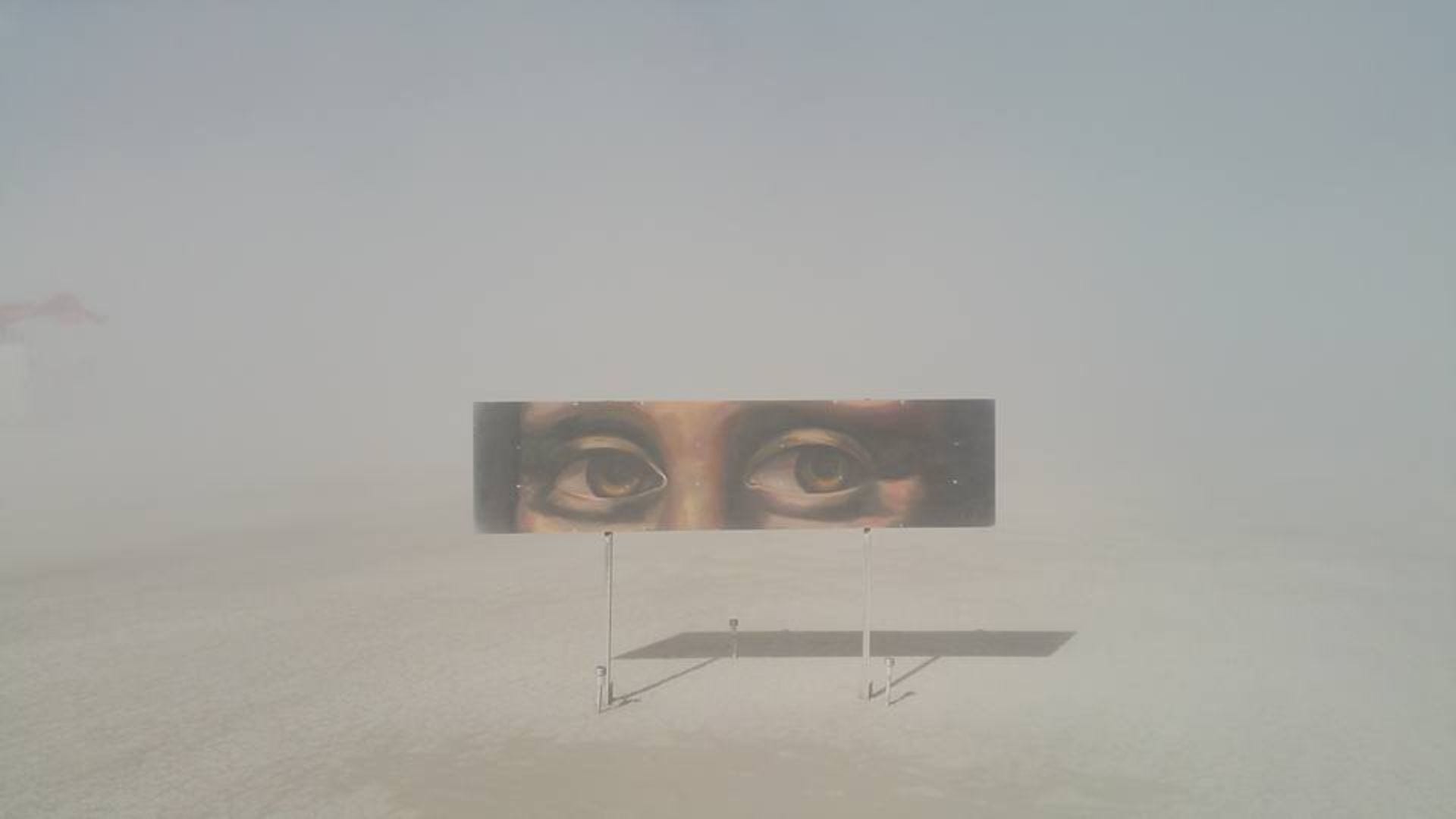
The Path You Walk
This is not your particular or personal failing. This is not a character flaw or evidence that you are doing life wrong.
This is the path you were appointed to walk.
Generations before you walked a version of it, too. They were in different conditions, but it all went the same direction.
The intention was innocent enough: move efficiently, produce reliably, and belong safely. The path was laid long before most of us arrived, and we simply began to walk it, because that is what you do before you know any better.
So we plod along the predictable path, under the guise of contribution, under the fallacy of endless consumption, and under the control of those who built and profit from our submission.
And not only are we encouraged to do so, we are also applauded for it.
The question nobody really stops to ask is: where is it actually going?
And more quietly, more personally: is it going anywhere I actually want to go?
THE CHAMPION OF OTHER PEOPLE’S DREAMS
I want to share something I have never quite said plainly.
The day that I graduated from university, I stood there in the overwhelming brightness of it, and all I felt was shame. Not pride or accomplishment or even excitement; shame.
I felt that I had studied the ‘wrong’ degree, chosen the ‘wrong’ next step, and given the ‘wrong’ answer to what comes next.
All of this was a rubric I had never once consciously agreed to, but had somehow internalized so completely I couldn’t find the seam between where it ended and I began.
Nobody gave me that shame. Not one person in my life whispered those expectations. I built that cage myself, furnished it myself, and locked the door from the inside.
But here is the part that took me even longer to admit.
When the door swung open, when the structure of school released me into what I had been calling freedom, I panicked. I genuinely panicked in overwhelm because freedom, it turned out, had no schedule. Out in the Real World, there was no one telling me where to direct my energy, my attention, my days.
And I didn’t want the open field, I wasn’t ready to be autonomous. I wanted another cage. A better one, maybe, that looked nice when I introduced myself to what I thought were important people, but I definitely wanted something that would tell me what to do next, so I didn’t have to face the terrifying question underneath everything:
What do I actually want?
So I did what was easiest, I said yes to whatever appeared in front of me.
I took a job someone offered that I didn’t even apply for, several times, actually. I threw myself into a path I didn’t choose, let alone really consider. I even traveled to places and spent my time and money on things picked by someone else, and although I had a good time, I never learned what I liked, what I wanted, or what was interesting to me.
It is a particular kind of experience to get so far and to excel so superficially yet never quite own any of it as one’s own.
I became the person I thought the world wanted me to be. When I felt I had failed at the things that would have made me smart, I decided to be pretty instead. When pretty felt unsustainable and hollow, I found bodybuilding. Someone said, “You should compete.”
So I did even though it was never ‘my dream’. I never woke up at seventeen with that particular vision.
And yet…
Today, I am an IFBB pro. I am a passionate coach. I lead people to heal their relationship with their bodies and minds, not for vanity and aesthetic’s sake but for the profound and vastly underrated experience of inhabiting yourself fully and owning your health story.
Through the suggestion of another, I was able to find my purpose. That meaning is real. It is mine.
But I didn’t choose it. Not originally.
So does that make it less my own?
I also have dogs I didn’t decide to buy, which completely transformed me for the better.
A husband who chose me first, and I am glad every day that he did.
A career assembled from suggestions, open doors, and things I was good at before I knew they existed, and I loved them.
And I am still, honestly, genuinely still, unraveling what is mine by nature versus mine by navigation. What I would have found on my own versus what found me first.
I don’t fully know yet what I would choose if I started from silence.
And I have made peace with the fact that this is not a failure of self-knowledge. It is just the truth of a life lived in forward motion.
We do not get to know ourselves in advance. We get to know ourselves as we do the living.
The question was never whether you originated the idea; it was whether you showed up fully inside it. Whether you brought yourself to it, or just a performance of who you thought you were supposed to be.
Just because you can doesn’t mean you should.
And yet so often, we do. We live in an identity of shoulds until we have spent long enough performing someone else’s version of our lives, achieving someone else’s definition of success, excelling at someone else’s dream…until one day something begins to curdle quietly underneath it all.
You can’t quite name it at first.
You just notice that suddenly everything irritates you.
IT’S NOT YOUR FAULT. BUT IT IS YOUR RESPONSIBILITY.
Let’s start with the first bit because it matters, and because most of us were never told it plainly:
The life you are living was largely designed before you arrived.
Not maliciously by villains in Big Bad Boardrooms, though systems and those who profit from them are certainly part of the picture.
But by something older and more automatic than conspiracy: the accumulated momentum of well-intentioned generations moving in the same direction, handing the batton to the next set of hands without ever stopping to see if it was still going somewhere worth reaching, or even if it was still working at all.
Your brain, magnificent and efficient as it is, was built for exactly this.
It runs on prediction. It conserves energy by recognizing patterns and automating responses.
This is how your brain is able to wake you into the same world every morning, route you through familiar automated movements and responses, filter out anything that doesn’t match what it already expects to find and so on.
Neuroscientists have identified an area of the brain called the Reticular Activating System. Its job is to regulate wakefulness and attention by filtering incoming sensory information, determining what reaches your conscious awareness, and what gets ignored.
Your Reticular Activating System filters reality based on what you repeatedly focus on, believe, and emotionally prioritize. This is why it keeps showing you the same kinds of cues, patterns, and interpretations, which can make your life feel like the same day playing on repeat.
The environment is not actually identical, but your day-to-day filter is.
You might just call it Friday.
It is not a flaw persay, in fact, it is how your ancestors survived. It keeps you functional. Just imagine how much cognitive power you would have left by noon if every decision were conscious?
The problem is that a brain optimized for survival and belonging is not automatically optimized for meaning, and at some point, if you are paying any attention at all, you begin to feel the distance between the two.
Most of us were never taught to look for that. We were taught to look for the path.
But the Reticular Activating System can only filter what it already knows. The same routine, same streets, same people, and once something is predictable, the brain stops flagging it as important and stops paying full attention. You move through it unconsciously. This is how life begins to feel like an endless loop.
Travel disrupts this.
Some people think that travel changes you more than therapy. I cannot disagree.
The input of new sounds, new language, new architecture, new light is impossible to ignore. The Reticular Activation System has no existing map for any of it, so autopilot disengages, and suddenly you feel online, alive, engaged in life again.
You notice more, feel more, think more. Time feels slower and fuller.
It is not just a change of scenery, it’s a temporary disruption of your filtering system.
Travel forces perception out of habit. And when perception changes, experience changes, even though you are still the same person in the same body.
A new perspective can reveal a new path, even if we don’t yet have the courage or perceived permission to walk it.
I had to leave mine entirely to understand that.
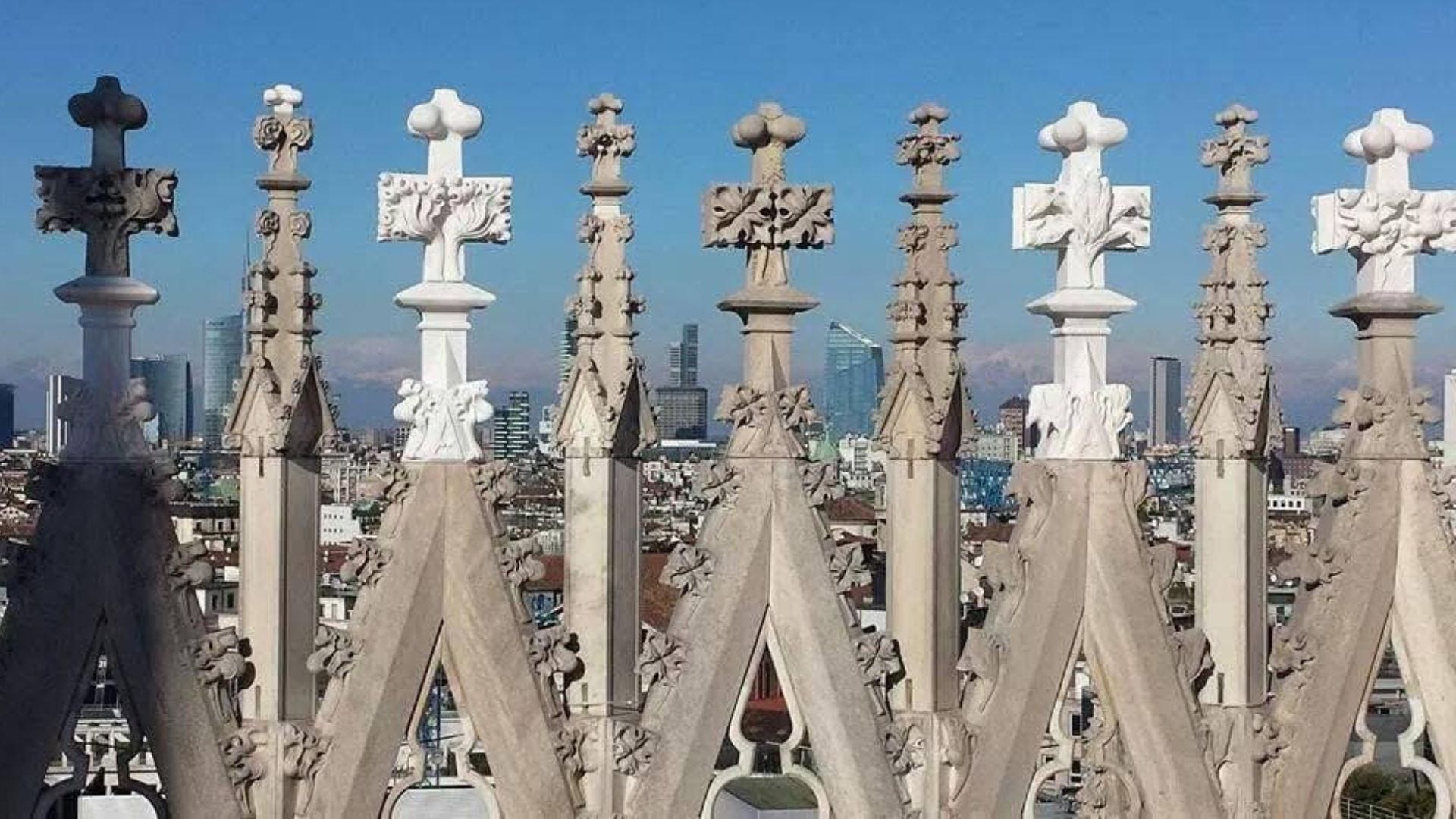
METAMORPHOSIS IN MILAN
I remember standing at the foot of the Duomo in Milan, staring up at the magnificence and magnitude of that enduring behemoth and wondering: who was making these observations?
Not who I was supposed to be or even who I appeared to be. Not the version assembled from other people’s expectations and suggestions. Just the one who was watching the birds fly by and wondering who was standing there.
It was the first time in a long time that I didn’t rush to answer the question. And rather than frightening me, the not-knowing felt like the most honest thing I had felt in years.
Not happiness exactly, not freedom, not fear…
Presence. I had no where to be except exactly where I was and there was no one to perform for or pretend I understood my observation and make superficial commentary on all I saw and felt. It was just me.
And in that particular city, presence has an extraordinary power because Milan does not allow you to think small or be hurried or go unconscious for long. She commands your attention and knows how to hold it.
Around every inconspicuous corner, ancient ruins stand in the shadow of modern towers. Streets that have existed for two thousand years now carry espresso bars, hidden restaurants, fashion houses, and the ordinary noise of contemporary life. Behind all of it looms the eternal and unmoved observation of the mountains.
I stood there in genuine awe, not as a tourist checking a landmark off a list, but one that clearly left its impression by rearranging something inside me.
Because what I was looking at was not just a city.
It was time, layered and alive.
The foundational things that will always be there, permanent, true, unchanged by whatever is built on top of them.
The ancient and enduring things of the past, still present, still relevant, still shaping the ground beneath our feet, indifferent to whether we acknowledge them or not.
And then the creative reinterpretation of all that has come before, the living city, reimagining its own inheritance in real time, building something new without erasing what was always there. And of course, the fashion, the food, the people!
Observing the nonchalant co-existence of what might otherwise be competing truths, I realized that I was looking at a map.
Not a literal map of Milan. But a conceptual one of the human path.
The mountains are what we are at the deepest level: the inalienable and foundational part of human nature that no system or generation or amount of conditioning can permanently erase.
The ruins are what was handed to us: ancient, important, worth understanding, not to be blamed but to be known and revered in their own right.
And the living, breathing, creative, chaotic, beautiful city is what we do with all of it.
But the map is not the territory.
What we build on the ground we were given, with the materials we inherited, in the direction we choose doesn’t translate neatly from the desire of the mind to the experience of the day.
That is the question Milan asked me without words:
Can I feel okay in the discomfort of being alone with myself, without needing to be the version of me that others expect?
And underneath that, quieter still:
Who might I be if I let myself choose?
Because most of us have been performing a version of ourselves for so long, for so many audiences, that we have genuinely lost track of where the performance ends.
We are not lying exactly. We are just over-layered. We have too much that’s not our own, and we carry it, building outward from the expectations of others until the original thing at the center becomes very hard to find.
Some people are better at tolerating that distance than others. Some can wear the costume long enough that it starts to feel like skin. Others, and perhaps you are one of them, perhaps that is why you are still reading, become quickly overheated and weighed down by a restlessness that won’t shake or settle.
For some of us, there’s a persistent, low-frequency signal that keeps reminding us:
This is not it.
That signal is not an illness and it is not a dysfunction, nor is it evidence that something is wrong with you.
It is the most honest thing about you.
It is information.
And here is what it is trying to tell you: the gap you feel between the life you are living and the life that feels true is not the end. It’s the beginning.
It is the entirely predictable result of a system that was never designed to ask what you actually want. Only what you can produce, how well you can perform, and how long you can walk the path you were placed upon.
Underneath the mask of conformity, behind the paradox of collective compliance and agreeableness, hums an increasingly irritating reminder of the truth: it’s all on us.
It is not your fault. But it is your responsibility.
THE DOOR
So what does responsibility actually mean?
Not the judgmental, obligatory, exhausted, heavy-shouldered version we feel when someone tells you to take ownership of your life and absolutely makes you feel worse.
The door of it.
For me, it started neither with a conscious revelation nor even a declaration of reclamation, just a refusal.
Multiple doctors told me: you are sick, this is your life now, these medications are permanent.
But no matter how many medications I took, no matter how long I followed their plan and tried to be a ‘good patient’, something in me kept pushing back: this is not it.
I honestly had no idea what it was, but I was sure in my bones, even if my brain didn’t understand that this path was not only not mine, it was taking me somewhere I really did not want to go.
I tapered off the medications against medical advice. I radically changed how I lived and started lifting weights, eating clean, sleeping deliberately, spending time in nature. I was not certain that it would work but I knew that I needed to find out who I actually was when I showed up for myself without the chemical management of who I was allowed to be.
Truthfully, it was really hard, and it still is hard. There are days I look at people who seem to move through life more easily, who can have a drink without consequence, who don’t have to structure their sleep and their food and their movement with such intention, and I feel the pull of wanting to be ‘more normal’. I sometimes think that I would love to not have to work this hard just to feel like myself.
But here is what I have come to understand about that struggle:
It is mine.
The discipline is mine. The clarity is mine. The particular way I inhabit my own body and mind are things that I earned through years of paying close, unglamorous attention to myself.
I didn’t choose the sensitivity, but I chose what to do with it.
And the more I allow myself to be in my sincere essence, the more I become someone I recognize. And kind of really like.
That is what responsibility feels like when it stops being a burden and becomes something else that we can alchemize into an identity of our own.
It does not offer freedom from difficulty, challenge, suffering, but instead, it gives space for freedom inside ot it.
Between the doctor’s prescribed path and my refusal to walk it was a gap, a void, a space of ‘if not this, then-,’ that exists after every ending before we know what comes next.
A man named Viktor Frankl spent his life studying that space.
LIFE INSIDE THE VACUUM
Viktor Frankl was an Austrian psychiatrist and neurologist who developed a radical idea: that the primary human drive is not pleasure or power, but the search for meaning.
He called his approach logotherapy, from the Greek logos, meaning purpose. He believed that a life without meaning was not just unfulfilling, it was the root of most modern suffering.
Then World War Two happened, and he had the devastating misfortune to observe and experience his theories firsthand as a prisoner in Auschwitz.
But we will get there.
First, the vacuum.
This is not what happens to a person when everything is taken from them, but what happens when nothing is outwardly wrong. It’s when life is safe, comfortable, functional, and still somehow feels like it’s not enough.
He called it the existential vacuum. The quiet suffocation of a life in motion that has lost its direction. It’s not a crisis, tragedy, or collapse but a persistent, low-grade sense that something essential is missing, and there is no obvious reason why.
And then came Auschwitz.
Frankl lost everything, literally. He was stripped to the absolute bare minimum of what it means to be a human being and in that extreme, he observed proof of his ideas about the nature of meaning: it could not be taken.
Even in the most severe and desolate nothing, the last and most fundamental human freedom remained intact. The freedom to choose your response to what is happening to you.
What really mattered was not your circumstances, not your suffering, not the hand you were dealt or the cage you were put in, but your orientation toward it.
The space between what happens to you and how you meet it is where your life actually lives.
When pushed up against the most radical extremes, it’s a clearer observation to identify the only thing that remains.
But today’s modern Western culture is almost entirely engineered away from the extremes.
There is no challenge of pure life or death survival. There is no longer silence or solitude. There’s no true darkness or boredom that cannot be immediately relieved by something in your pocket.
Every uncomfortable feeling has a same-day solution where the interval between discomfort and sedation is getting much shorter very quickly.
Every signal that something might be wrong can be rerouted, medicated, optimized, scrolled past before it has the chance to become a question.
And so the vacuum persists, but quietly and maybe more dangerously than ever before.
Think of the difference between the addict who has lost everything and the one who is still functional.
One is still showing up and performing.
The other is at rock bottom and is forced into a life that has no choice but to face it. The reckoning arrives whether they want it or not.
But the functional one can keep going. Indefinitely if there is no emergency or intervention. There’s no moment of truth where the cost becomes undeniable. They are too comfortable to collapse and too numb to notice they are disappearing. And so they drift further from themselves, longer than they should, with nothing and no one forcing the question because it’s bad, but it’s not really bad enough.
That is the cruelest trap of modern life. More misery comes not from acute suffering but from manageable suffering. The kind you can live with forever without ever being forced to face it.
That is most of us, right now.
We are not broken enough to demand repair or empty enough to force the question. We are just kind of here, a little unhappy and slightly off. Slightly aware, in the thirty seconds before sleep each night, that something was supposed to be different. That this is not it.
Although this is arguably the most advanced and best time in human history, objectively and measurably, we are suffering more than ever before. We have the highest rates of anxiety, depression, loneliness, purposelessness, addiction, and chronic illness. But we don’t call it suffering, we call it stress. We call it being busy. We call it modern life.
Because admitting the hum is real means admitting that the life underneath it might need to change. And that is a terrifying thing to admit from a position of comfort. It is, in many ways, harder than rock bottom.
At rock bottom, the choice is made for you. Here, in the land of the frazzled but functional, the meditated and medicated, the mostly fine and the good enough, the choice has to be made voluntarily.
Against the current of every distraction available to you.
A choice to question what we still benefit from, in the seat of comfort and safety and privilege, in a life that looks, from the outside, completely okay.
That is what makes asking what is this and why not a small or indulgent question, even though it feels like one.
People will rally for a stranger on Monday, cry outrage at injustice on Tuesday, weep for a celebrity on Wednesday, march in the streets for a cause they cannot explain — but when it comes to the observation, the questioning, the strengthening of their own soul, they are resigned.
We will invest extraordinary energy in everything outside ourselves. The one place we will not look is inward. And no wonder, because inward is where the answer lives, and the answer is asking something of us.
Yet for all its discomfort, undoubtedly right now, it is one of the most courageous things a person can do.
Because free will is not a switch you flip, nor is it a decision you make once and are done with. It is not binary; fully free or fully caged, fully awake or fully asleep.
It is tidal.
It waxes and wanes across a life. It flickers into fuller expression in moments of intuitive reaching, like when something in you pushes up against the edges of who you came here to be.
And it recedes in long stretches of unexamined habit, unconscious compliance, the same day looping on repeat.
The capacity is always there. The tide is always moving. The question is only whether you give it enough space to come in.
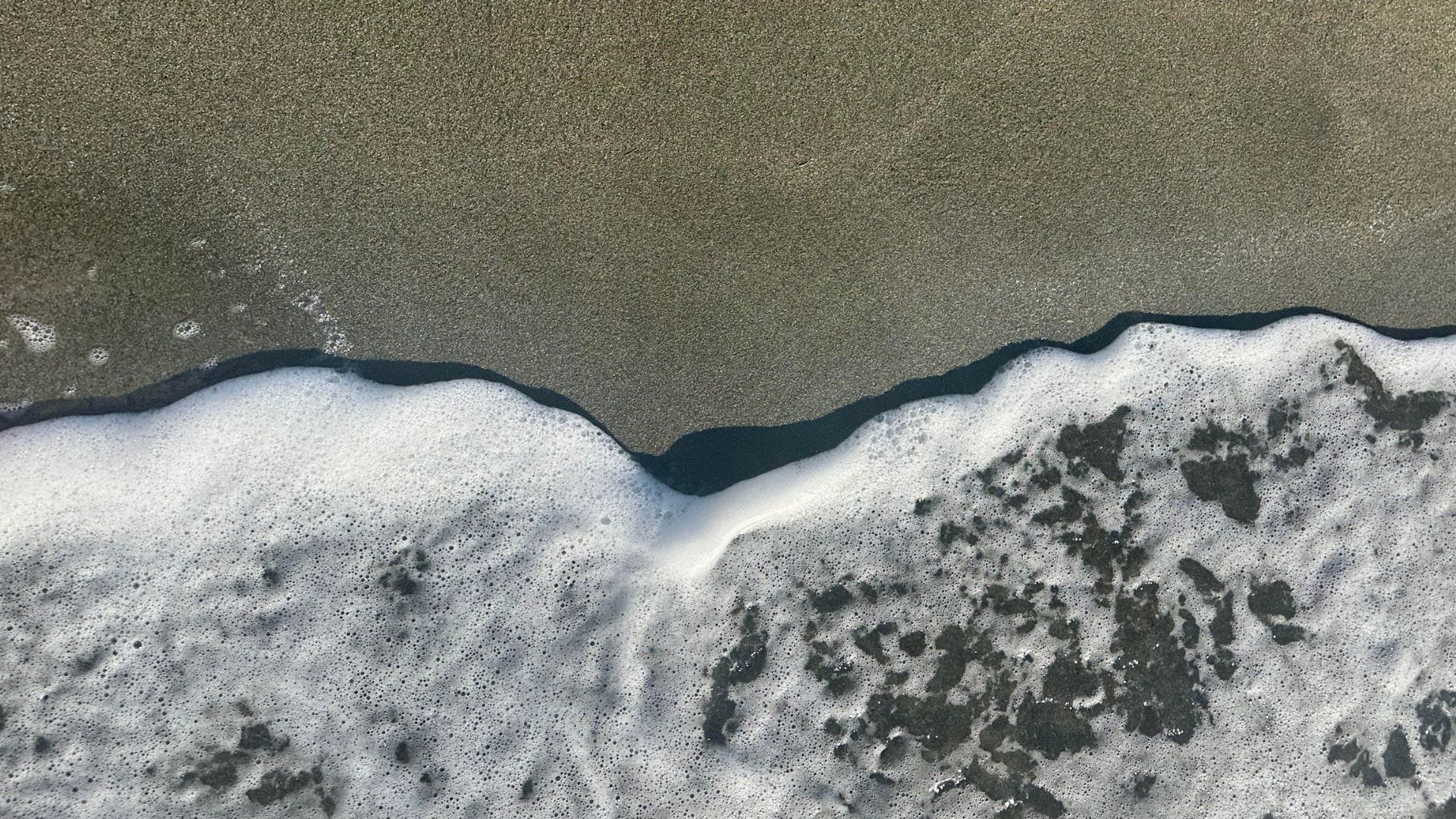
THOU MAYEST
So what does the tide coming in actually feel like?
Not as a concept we read about, but a practice in real life.
It’s in the body, on an ordinary day, when you are most fully yourself.
For me, it feels like this:
A walk as I observe the sky doing something I wasn’t expecting, or the birds, or any element of nature winking back in approval of my full presence.
A sudden overwhelming sweep of love for my dogs, my husband, the specific quality of light on a specific afternoon that I will never see again in quite that way.
The way rose petals deepen at the edges and increase their beauty as they’re dying.
Really good food eaten slowly while it’s still hot.
The sensation of being in a body that is paying attention.
The particular richness of existing here, now, as this person, in this moment, not performing it, not documenting it, not saving it for later, or trying to explain it.
Just here.
The present moment is the only true place we can live, for it is the only thing that is actually real.
That is not a destination that I arrived at, and it is not a reward I earned for having done the work ‘correctly’. It is what becomes available in varying intensities, always in flux when you begin to close the gap between the life you are living and the life that is actually yours.
It doesn’t require a dramatic transformation. It doesn’t mandate leaving everything behind forever or burning the path down or having a revelation on a mountaintop. It might come that way, but it doesn’t demand anything big of you, just that you decide what it is to be yourself right now.
And if you don’t yet know, the good news is that the seeking itself is the solution.
LIVING PROOF
The tide coming in is not a singular moment. It is a process.
Your new life does not start loudly the second the old one ends. There is an in-between that is probably quieter than you expect and longer than you’d like.
And you’ll be there for some time, neither fully as who you were, nor yet all who you are becoming. You’ll have to learn to exist there, as you are learning to figure it out.
And when you do, you might be surprised to find that you return to the exact same path you left, only this time, you walk it differently.
That is what Alyssa Liu did.
You may have heard her name recently...
She just won Olympic gold in figure skating at the 2026 Winter Games. In Milan, as it happens.
But the most remarkable part of her story that matters for our purposes isn’t the gold medal but what happened before it.
She retired at sixteen, at the alleged peak of her potential when she was one of the most gifted skaters in the world. But the system she was inside had filled the sport with other people’s projections, other people’s definitions of who she was and what she was. So she left and sought the space to find out who she was without it.
She said: “When I quit, a lot of the toxicity I had attached to skating just disappeared. When I was a kid, so many people told me who I was and who I wanted to be. I didn’t have a chance to explore myself. But now I have. So I’m feeling really grounded in who I am.”
She didn’t decide that skating or even its systems were a bad cage and freedom could only exist somewhere else. She left, found herself outside the structure, and then chose to return, which made everything inside it, afterward, genuinely hers.
The discipline, the sacrifice, the gold all had new meaning because she had found hers.
The system didn’t change, she did.
That is the distinction this entire idea has been reaching toward.
It was never about the cage. It was always about whether you are inside it by default or by decision. Whether you are living your life or performing the version of it that was handed to you before you had the chance to ask what you actually wanted.
The tide, when it comes in, doesn’t announce itself anymore than it doens’t suddenly just appear fully in and there. It doesn’t arrive with clarity or certainty or a finished answer to the question of who you are.
It comes in progressively, rhythmically, in the way that all real things do, until one day you look down and realize your toes are wet and you’re standing somewhere different than you were.
TIDAL WAVES
A tidal wave is not a sudden event. It is the result of everything that moved beneath the surface long before anyone could see it coming. It requires withdrawal, space to build pressure, and a long, invisible buildup of force with nowhere yet to go.
We are the same.
We are not simply the product of our conditions, our upbringing, our culture, our biochemistry, our circumstances. We contain within us a vast range of possibilities and potentialities for who we could be. Who we actually become is not determined by what happened to us but by the decisions we make in response to it all.
The conditions build the wave. But we decide when it breaks.
Free will is tidal. It builds beneath the surface, unobserved and unconscious until something shifts and it finally has room to move.
The capacity was always there. The question is only what finally gave it space to break.
It’s you.
The smallest shift in current is enough to begin.
It’s a single question asked in honesty. It’s a moment of being still and silent and alone long enough to hear the hum of our own inner workings and just listen rather than drown it out.
How long can you hold on to the exquisite sound of silences without rushing to punctuate them with noise?
If the goal of life is experience, there is truly nothing to lose.
Every second that you are here, in it, outside your cage, and in life, you are gaining something untouchable, irrevocable, unmistakably yours. It is freedom, if only in the inner realm.
I have a tattoo on my finger. It was my first, a practice run before a bigger one I was planning, chosen quickly and executed imperfectly. It smudged a little in the healing, and it’s not entirely what I imagined it would be.
It is an anchor.
I got it before I had ever seen the ocean. I chose it because of what it meant to me:
I am the captain of my life.
I almost chose different words, to thine own self be true, but something pulled me toward the symbol of it all instead. The anchor. It’s both what holds you to yourself when the current gets strong, as well as what you release when you are ready to move.
I live by the sea now, and I love it deeply, as if a part of me always knew I would.
The smudge used to bother me, but I appreciate it much more now. Because whatever this captain does with their life is not going to be perfect. The course will change, the map will be redrawn, and sometimes thrown to the wind entirely. There will be winds navigated badly, ports chosen for the wrong reasons, and long stretches of open water with no land in sight. And my gosh, will there ever be storms.
But the journey, like the ship, is mine.
And yours. And everyone who has ever stood at the foot of something enormous and also wondered who it was doing the looking.
It is not only inside all of us, but it is also available to all of us, always, at any time, no matter how deeply we have receded into our cages, nor for how long.
John Steinbeck spent years writing East of Eden, an adventurous novel spanning multiple generations with a long, rich, complex journey wrestling with the oldest question of human nature: Are we destined to follow the path of good or evil, or do we truly have the power to choose our own destiny?
It’s a sprawling story worth the time, but for me, what endures most is a single prophetic extraction so simple it could only be the truth:
Thou mayest.
That is what TIMSHEL meant. Not that you will live fully. Not that you must. Not a command or a promise or a guarantee of arrival.
Just the oldest offering and most radical permission ever given:
Thou mayest.
The door is unlocked. It has always been unlocked.
What you do with that is the only question that was ever really yours to answer.
And it’s normal to have no idea what feels like your own. The not knowing is not an obstacle, it is an invitation. The beauty is in the mystery of discovering all you don’t yet know, especially about yourself.
You will get there. But right now you are here.
And here is the only place you need to be.
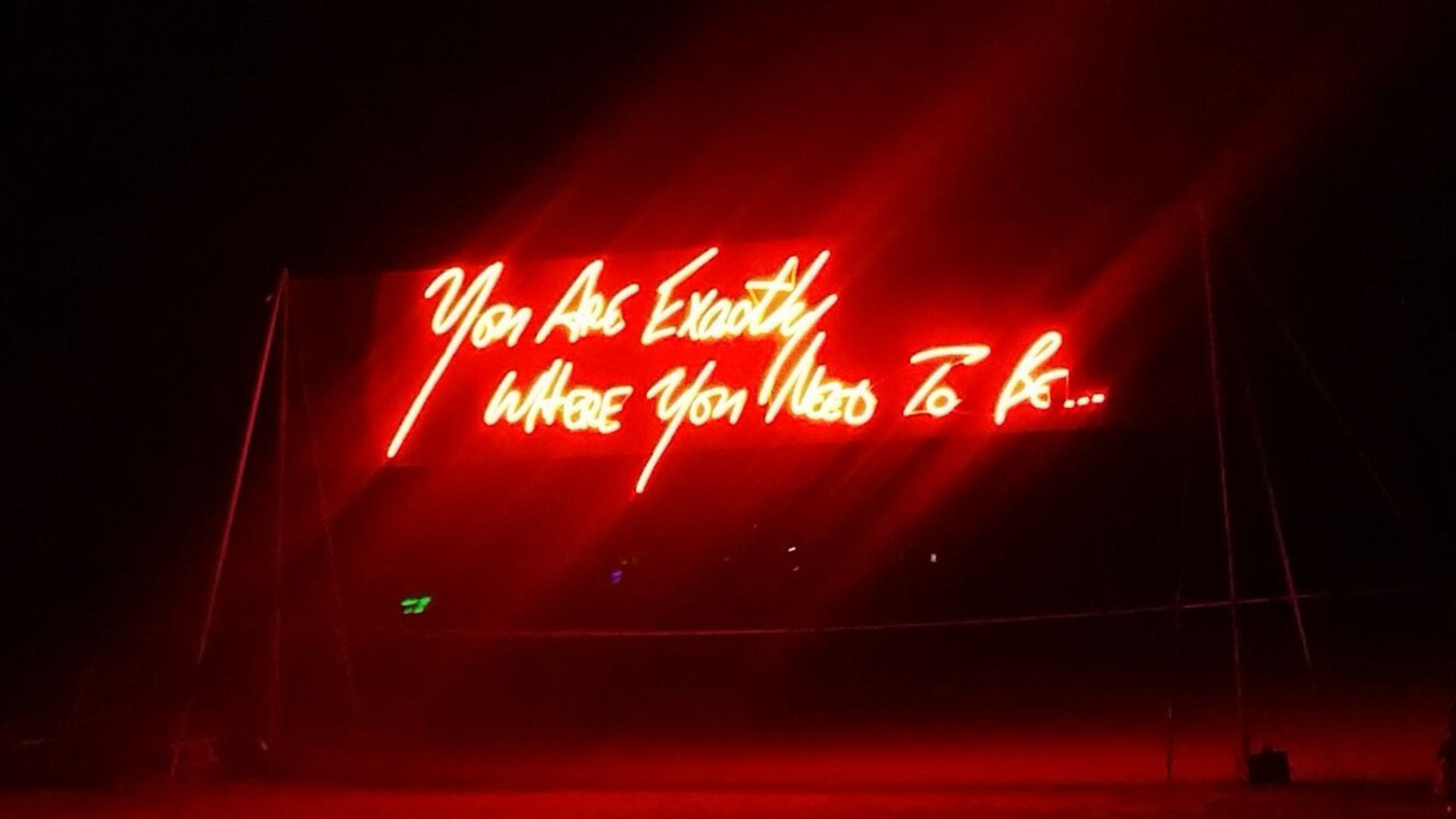
Dedicated to the seekers, the questioners, the restless wanderers, and everyone in between, in the unknown, just like me. Thanks for being here, SJT