

I will always remember the first time I saw the mountains in North Vancouver.
My husband and I had just spent ten days driving across the country from Ontario to British Columbia in search of a new home. But North Vancouver was not the destination we envisioned, in fact, we didn’t yet know that it existed.
We ended up there entirely by accident, having booked the wrong hotel. The one we had intended to stay at was near the airport in Richmond, but it was full, so instead we found ourselves making our way to the North Shore.
We were crossing the bridge over the ocean when three snow-capped mountains emerged from an endless stretch of lush evergreen forests and merged with the misty clouds hanging around them like crowns. Both of our jaws dropped and our eyes grew wide as we gasped, What is this place?
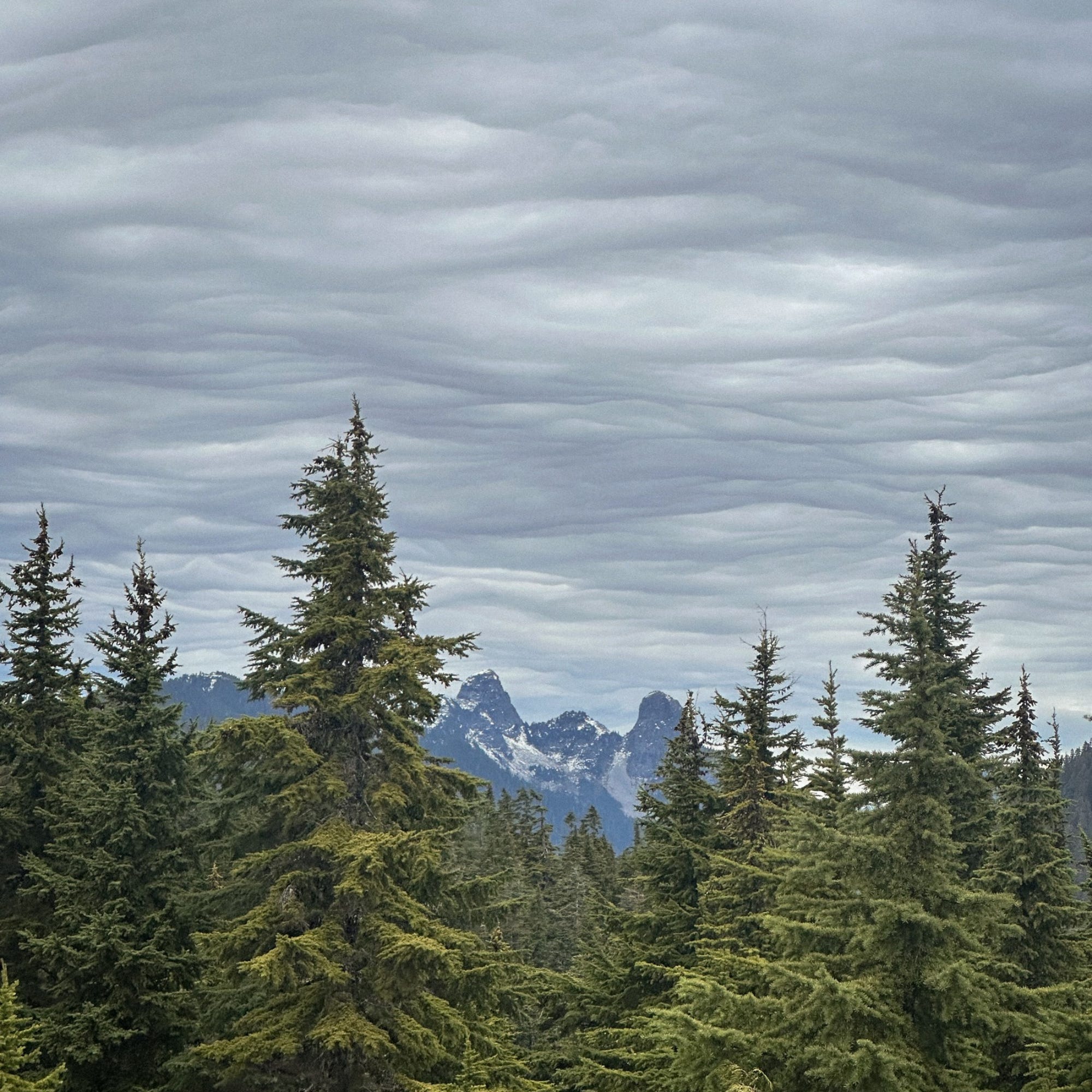
The next day, we signed a lease on our new apartment. I remember promising myself, then and there, that I would never lose my reverence for the mythical beauty that surrounded me; that I would never become so accustomed to it that I stopped appreciating it.
But ten years later, I barely even noticed it.
I had become a rather avid cyclist, and there was this one route I rode over and over again through an area called the Demo Forest, a 12-kilometre out-and-back paved path winding through the dense forest of Lynn Valley, right in my backyard. I measured my output on my Apple Watch, tracking calories and heart rate. I also recorded my rides on Strava to compare my speed, times, and different segments of the route against my previous rides and other cyclists.
Several times on this route, I managed to rank very high in certain segments, occasionally earning a tiny Queen of the Mountain digital crown, and sometimes joyously beating competitive cyclists on some of the hills. Many rides, I became so engrossed pounding along the path that I didn’t even observe where I was. I would suddenly awaken to myself buzzing through a forest, blasting personal records, only to realize that I had missed the whole beautiful winding scene in one hurried blur.
Somewhere in the repetition, I lost sight of the extraordinary beauty I had once promised myself I would never take for granted as it simply became the backdrop scene for another opportunity to optimize my performance.
LIFE AS A SELF-IMPROVEMENT PROJECT
I am of the fortunate minority of girls who did not grow up watching their mother’s heroic struggle through the world of Weight Watchers, Jenny Craig, or the Bernstein, and South Beach diets. But like many young girls, I developed a self-conscious fixation on changing the way that I looked all the same.
My problem was that I hit puberty before I was ten. Still in my single digit innocence, I was quickly thrust into the spinning world of bras, periods, and no longer looking qualified to eat from the kids’ menu or go trick-or-treating. While all the other little girls around me stayed little— petite, delicate, dainty, girlish, fragile— I loomed over them, and I felt like a monster.
Secretly, I began internalizing a deep sense of loneliness measured by my otherness, which was confirmed by the fact that my legs were more than double the size of the sticks and twigs around me. I don’t earnestly remember wanting to be like everyone else, but I do remember wanting what every middle school kid wants: to be liked. To have a sense that I belonged. But I never did. At least, not in the same way as everyone else.
And it wasn’t only my appearance that made me feel different.
My dad died in the summer when I was fourteen years old. We had his funeral a week later, and an outsider might have concluded that he was a well-loved man, for the funeral was crowded with a collection of family and friends, all weeping while paying their respects to the dead man. You might say it was a beautiful funeral.
I had quite a different experience of that day. I was enraged, pissed off, livid.
For an entire year, my dad withered away from the inside out from cancer. My mum and I watched his slow and painful deterioration as we attended the rotating appointments for chemo, radiation, failed surgeries, and countless emergency visits. For an entire year, the three of us navigated this horrific experience together, but otherwise we were alone.
When I saw all the people gathered for his funeral, all I could think was, “Where the fuck were you? Where the fuck have you been? WHERE WERE YOU?”
I had the exact same thought lying in a recovery bed a dizzying five months after the funeral. I had just had surgery for the removal of a large tumour in my lung and spine. I was still fourteen, but now I was dad-less and a verified sick-kid. This became just another thing that my mum and I navigated alone, but now we were down to two.
I understand that sickness makes people uncomfortable. No one knows what to say. No one knows what to do. But the only thing that people actually need is for you to show up. In our case, no one did.
And that’s how I learned to correlate sickness with abandonment. If I ever wanted to belong, I realized I had better learn to be healthy.
Which is a long way of saying, I came into the culture of self-improvement not through the same lens of traditional dieting to be smaller, but of optimizing to be exceptional as a means to validate my otherness as acceptable and worthy of belonging, maybe even love.
Thankfully, my premature hormonal burst gave me several advantages, both in the classroom and in sport. Soon I was a star and they nicknamed me “Little Miss Perfect”. I learned to be the best to the point and intensity that anything less than winning was losing.
My approach worked really well until it broke and didn’t work at all.. It is, I suppose, a little hard to be the best at everything all the time forever. But boy, did I ever try.
This mindset, that there is no second place, that you either win or you lose, became the foundation for my sense of self-worth that I’ve honestly carried into everything I do, right up until January of this very year.
Although it was a haven for masochistic expression, it was hard to discard because it worked remarkably well. I became exceptionally athletic, disciplined, capable—even healthy— and I experienced all the praise, validation, attention, and interest that came with those things.
But none of it provided the stability or belonging I had hoped it would because being admired for a collection of qualities, however genuine, is not the same as being understood and accepted for the person you are beyond them.
I wanted to be seen in the truth of my vulnerability, but I was honestly too terrified to show any because I knew that was not what people wanted to see when they looked at me. They wanted inspiration and strength, so that’s what I gave them.
People could have an entire vision of who I was, constructed from what I had accomplished or what I appeared to represent, without having any curiosity about who I actually was. And the more recognition I received, the more I found myself pursuing it, never able to attain any sense of satisfaction because what I wanted all along was to be accepted without having to continually demonstrate why I deserved to be.
Ultimately, being known for a representation of who I was, even by many people, was not nearly as fulfilling as being understood for the whole of who I am.
You can’t get enough of something that almost works.
A lot of my life as been dedicated to becoming an optimization queen. If it could get improved, it did. If it could be made better, it was already done.
I got my first heart-rate monitor, a Garmin chest strap and watch, in 2017. Tracking data, collecting metrics, recording, measuring, optimizing it all opened layers of obsessive programming I never dreamed possible. I got my first Apple Watch at Christmas in 2019 and my first Oura Ring in the spring of 2020. Between them all, nearly every breath, step, rep, and bite was calculated, considered, and often changed to influence better scores.
Did I look and feel better? Sure, absolutely. But by what measure, and of what value? Was I my best compared to my worst, compared to my potential, or compared to my lived and felt experience?
More than a few times, I woke up feeling heavy, tired, feverish almost, but I pushed through a soul-punishing workout because my data said I was “fine”. Too many times, I received warnings or cautionary notifications that my numbers were dropping and I should take it easy even though I felt great. I wince at the memory of how I yielded so much empirical truth to a theoretical one.
The technology overtook my own biological intelligence with startling swiftness. With the cold indifference characteristic of machines, technology easily subverted the reigning authority over how I was feeling and what I should do. I somehow overruled the signals of real life in favor of their statistical representation, blinking from bits of plastic, sending messages over Bluetooth pulses from my body to my smartphone and I let that interpretation tell me how I was doing.
I outsourced my own ancient systems of body wisdom for a collection of algorithms from big tech and called it wellness.
THE INDUSTRIALIZATION OF THE EXISTENTIAL WOUND
Yes, wellness. The quiet rebrand of the multibillion-dollar diet industry to include the modern aesthetic of neutral-tone polyester Pilates sets, breathwork and biohacking, complicated longevity protocols, and a whole new industry of ‘essential’ wellness products championing gut health, ageless longevity, and cellular rejuvenation, all marketed through the lens of healing and conscious elevation.
Okay, but I know a spade when I see one.
We simply industrialized the existential wound and wrapped it in new packaging.
We believed the myth of separation and tried to solve it with a greater myth of permanence by building an entire industry to solve the discomfort of being human, proudly decalring it wellness.
Somewhere we were sure to weave in the same feelings of shame and inadequacy, where self-improvement became an obligation, and ultimately just another thing to fail at, struggle through, or strive towards. But even when we got close, we were never absolved of the feeling that we just weren’t good enough—yet.
I remember the day I realized that I had made ordinary effects into defects that now required my perpetual correction. I was going to a music festival, and part of me felt good knowing that not only would I be getting my steps in, but that I would be going above and beyond my daily count. But another part of me felt bad for knowing that the festival would mean that I got less sleep, which would lower my sleep and readiness score. Which are both really silly things to be thinking about in the place of excitement for an experience you say you really love.
At some point, I had to ask myself: was there a metric that measured space for morality in wellness? And did one actually belong there?
You can’t get enough of something that almost works. Almost healthy, almost happy, almost beautiful, almost successful, almost the best, almost enough— but you just can never get enough.
And you never will because the truth is, something always has to change.
If we were really honest about health, we would have to admit that it’s not something we can have. Health is a variable state of something that we can be, and being is an embodied experience, which by nature is fleeting and impermanent. But there is an entire industry, a culture almost, that is dedicated to selling a myth, the illusion of immortality, essentially rejecting time and promising what is impossible: permanence. Immortality through transcendence of the sacred transition otherwise called death.
We have been tricked into believing that health is a possession, something we can earn or buy, something we could do, and if we did it enough, even something we could have, perhaps permanently. Wellness, we call it.
But wellness is not a thing. It’s a feeling. It cannot be found with a new gadget, or demonstrated by a new metric, or discovered in a new supplement, or acquired with the latest tool. And yet these things can give us the data, sometimes even the sensation, that we improved, often just enough to keep us chasing the illusion.
But we never actually arrive at enoughness. We are not convinced that it can hold us in a state of wholeness, because life isn’t full or steady. It is cyclical, spiral, a never-ending sequence of endings meshed with beginnings, dissolving into loss, rebirth, and transition all at the same time.
Wellness sells the false hope that we can get there, that there’s something to achieve or somewhere to reach that is more optimal. All it takes is another purchase, protocol, or program, and we could get there. Fully optimized and complete.
But an industry that profits off continual improvement will never incentivize completion.
We are told that it’s on us and sold the idea that we can individually optimize ourselves out of collectively unhealthy conditions. Many of us actually have the hubris to believe that we can do it on our own, if we just had the right tool, the right protocol, and got our numbers to the right places.
And here is how we industrialized the existential wound of separation that convinced of us our inadequacy and not-enoughness.
For years, I worked in the wellness industry myself. In many ways, I still do, but now on my own terms. But for four years, I worked for a health supplement company obsessed with optimization—and it was a complete paradox.
Internally, we moved so fast that our own working systems never settled before they changed. We were headstrong on maximizing ROI at all costs, with little opportunity for true creative innovation as we pursued constantly evolving targets and increasingly optimized metrics, all the while chasing the wellness engine instead of contributing to the creation of it.
It was here that I learned you don’t have to loudly celebrate something you have done if you are truly steady in living in that alignment. It is just second nature to your existence. Instead of championing a lived reality of health and wellness, the brand applauded all-nighters and incentivized unhealthy, always-online, perpetually available attitudes.
The company didn’t even know who it was or what it was serving. Sure, it had a beautiful spreadsheet and mission statement with its declarative vision, but internally, it was completely misaligned with what was on screen. We were grasping at threads for the best bottom line and the most impressive successes instead of the most honest or impactful ones. Financially, we just wanted our numbers to look good until the concept of helping real people improve their health in meaningful, unmeasurable ways became entirely abstract.
Eventually, it became obvious to me that profit was more important than people, and that the company was becoming increasingly out of touch with its customer core and original sentiment. They willingly traded the raving fans for pay-to-play influencers, surrendering people who were loyal for loyalty at the right price, seeking people with big followings and authority to push product versus investing in lifting up the community that already knew and loved them.
They bent themselves into such a grotesque performative shape for social applause measured by better metrics that the ethos eroded the ethics and reduced it to a shadow. The company lost context and thus lost meaning.
Increasingly, my colleagues became strained, impatient, aged and heavy, many dealing with their own chronic health issues that they brushed aside by pumping themselves up on nootropics. But while the foundational biological organisms broke down under the pressure of exhaustion, the company preached the 6-sigma system of optimization and suggested everyone become an expert in AI.
RETRUN TO SENSE
I wish I could tell you that I quit corporate and stopped tracking every metric because I was strong enough to walk away from the addictive nature of self-improvement and my obsession with optimization. But the truth is that I quit because I had no other choice.
I got hit by a tidal wave of grief. I tried to keep my head up, to just keep swimming, to do the bare minimum motions to stay afloat. But the waves kept coming so relentlessly until finally, I realized that I was deep inside a raging storm and the only choice was to surrender.
I look back upon my desperate efforts to cling to my old system of steps, sleep and readiness scores with the same sympathy for other unfortunate souls so lost within their own ignorance.
At one point, I recognized how my scramble to try to organize and optimize myself inside a life that was falling apart was having the exact opposite effect of its original intention. If better quality sleep was supposed to make me feel better in my lived life, what was I supposed to make of the fact that even maintaining the foundational minimums for what was good, never mind excellent scores, had become impossible?
I became increasingly stressed by my failure to hold and maintain yet another pillar of my crumbling life, which only made me feel worse and worse. I began to need confirmation from my trackers to tell me that I was doing okay when I clearly knew that I wasn’t.
I had forgotten how to trust the feeling and turned heavily to checking my biometrics multiple times a day to tell me what I was supposed to feel. I forgot that I was allowed to decide that for myself, and something more which the flat declarations of numbers never could: that I often felt more than one thing at once.
There’s no number used to quantify the mixed sensation of rage, hypervigilance, grief, helplessness, exhaustion, as it subtly intermingles with gratitude and relief, now is there?
I felt too many things at once, and worse than living in that confusing myriad of translations from my brain to my body to my soul and back again was the complete abstraction from truth reflected in my data.
So I took off the watch and packed it in a bag. A few weeks later, I took off my ring and eventually, I remembered to cancel my subscription.
The first few days without my tools to measure, I felt like I had phantom limb syndrome. I kept checking for what was not there. Several times I caught myself swiping through my apps, searching for something that was no longer on my phone but inside my body.
How was I doing? Really?
At first I didn’t know how to find out, but it was not because I was incapable, only that I had forgotten how to listen to the quiet ache within.
The ancient wisdom of my body was calling me back to rediscover the home inside myself. The signal was always there, but it had grown weak, so heavily suppressed beneath the endless chatter of a loud, hyper-connected, machine-driven world. The feeling is the measure, everything else is more. I had to learn to feel again.
I started by breathing, which was harder than I expected, since I had gotten used to relating to my body in separation, using systems in isolation instead of the one beautiful design I was created as.
It felt hard to get my chest and diaphragm to move together. I struggled to pull a single inhale through my nose and deliver it smoothly down into the intelligence that could distribute it evenly across all my cells in need. Scarcely had I begun to take a breath when I hit a stutter and the urgency to shift into exhale, panicking with even the slightest hesitation or discomfort, finding myself trepidatiously torn from my body and oscillating in the chaos and the urgency of my head, only to start over and over again.
Eventually, I learned to breathe.
I also learned to be still, though it had always been an insurmountable difficulty not to pace, fidget, jabber, and truly vibrate through life.
I learned, by even more arduous pains, to be silent. I learned to sense meaning from the space between words, to understand the importance of what was not said, and finally, how to be discerning if not far more intentional with my own voice and energy.
I learned to embrace solitude with new depth, vigor, and appreciation. I’ve always valued my alone time, but I had to confront an unsettling truth that most of my time alone was still a performance, with the intention to find some nugget of wisdom I could return with to use as a tool to validate my usefulness and worth.
I had grown so accustomed to constantly observing myself in search of something to optimize that the very act of observing changed the actual experience of just being myself. I had to learn how to do that again.
I learned, eventually, to be unnecessary, futile, unproductive, empty, bored, void. I learned to take up space and do nothing with it.
I lost track of time, or rather I let go of tracking time, floating in unmarked space with complete blindness to the hours in a day as much as to what day or even month I was in. I learned to listen for and eventually how to hear and understand my existence, my being, and what it meant to feel time as a lived sense, both as a season of my life as much as a season of life on Earth.
It suddenly seemed absurd, ludicrous, cruel even, to have demanded of myself to impose a single, uniform formula upon myself every day, repeating the same bid of effort towards the same desired outcome, like a machine. But I am not a machine, nor do I want to be one.
I am a human, being.
Learning to be with myself, be with my life, and be inside the diverse, living, changing ecosystem that is my body, with all its sensations and variations, as it feels to be assembled into the existence as a life that is part of life.
My data told me that I was one of one, singular, separate, isolated from life, and it encouraged me to impose rigorous routines upon my systems to optimize. It cut off context, such as bucket-list vacations, transient sickness, grief, concerts, midnight meteor showers, heartbreak, thrill—even awe. And without context, life lost some of its meaning. And life without meaning is not real life at all, but a shadow of it.
I had been living in the shadow of my reality and confusing it for the real thing the whole time. No matter how many tiny crowns I collected, I would never feel like royalty in a digital world. It was only by my sovereign return to the biological experience of life, not the technological interpretation of it, that the true feeling of my majestic and noble existence could be lived and felt.
All of my smartwatches and tech tools could provide more information, and that information could be translated into self-knowledge, or rather, a form of self-knowledge. But information and knowledge are not wisdom.
I had initially started my self-improvement and optimization pursuits to get better, genuinely. But at some point, I found myself in an automatic pursuit driven by a fear of falling behind, all the while asking myself if I was enough yet.
But what is enough? To be honest, I’m still learning how to answer that question, as well as how to define a genuine answer for myself. I used to believe that I was not enough. That I could never do enough or be enough to feel enough. Today I feel good enough most of the time. And I don’t mean that in a dismissive way, but in an honest, sensed and felt way. It is not something I settled for, but something I learned to sincerely inhabit.
But then another question arises: how can I remain ambitious without turning my whole life, my whole body, my whole existence, and all my energy into a self-improvement project?
I don’t have the answers yet and even once I find them, I’m apt to change my mind. But where the past year has taught me a masterclass in how to truly surrender, the current chapter I’m in is teaching me how to fully trust. How to trust myself, how to trust the signals of my body, and how to trust that I don’t need to have all the answers to know that I can trust the feeling of something deeper within me, even when I can’t make sense of it.
And perhaps this is where I find myself now, learning to distinguish between the desire to become more capable of living and the compulsion to make every part of it contribute to becoming more capable. And as much, I am learning to hold that uncertainty and surrender the need to know before believing that I can trust myself to hold both without needing to resolve either.
NOTICING THE NOW
I have always appreciated, sometimes with reverence though more often with horror, the dexterity of the human capacity to adapt. So swiftly can we become accustomed to almost anything, including circumstances we never wanted and things we once thought we could never endure, and even the otherworldly beauty we once promised ourselves we would never take for granted.
Repeated exposure over time has a remarkable if not curious way to get us to stop noticing.
But of course, this is part of what makes us so resilient. We have an enormous ability to adjust to anything so that what was once wonderful or terrible soon becomes normal.
Yet that same capacity is also how we become so accustomed to the world around us that we eventually stop experiencing it with wonder, curiosity, or even awareness.
It does not take long to lose touch with the reality of how it feels to be alive. Thankfully, it also does not take long to remember.
Something happens in the space and silence of slowing down, of being still and getting quiet. You begin to notice.
You notice things you’ve seen a thousand times before but haven’t had the capacity to consciously observe because you’ve been too busy filtering through all the noise of that which doesn’t matter. Sometimes you’ll notice something as if for the very first time and wonder if it has always been there or if you’ve somehow stumbled upon something genuinely new. Is it new? Or are you?
You’ll notice the way rose petals begin to darken at their edges once they stop trying to bloom and start dying. You’ll notice the persistent way rays of sun break through tiny openings found in the branches of that same old tree and how as you move, so do they.
You’ll notice how your seventeen-and-a-half-year-old dog, Oscar, no longer bounces to the door to greet you, how his tail doesn’t wag as broadly or as often, and how these little changes happened so gradually that don’t actually remember the last time it was the last time you witnessed him the way you remember. And as you notice how slow and thin and grey he has grown, you become conscious of your own impermanence, too. Because although you don’t necessarily feel that much older yourself, here is this little life that has been unfolding alongside your own and it reminds you that time really has been passing all along.
One day you will do something for the last time, and if you are lucky, you will notice.
And finally you’ll notice how much of what once seemed so important doesn’t matter anymore, not even in the slightest. And how much of what actually matters most has always been happening while you were busy with everything else. You’ll begin to reconsider how you spend your time, who you spend it with, and whether the life you’re working so hard to improve is also one you’re actually making time to live.
At least, that’s what I noticed.
I realized how much of my life I had spent filtering, collecting, translating, categorizing, scanning, assessing, measuring, projecting, but not actually noticing. Because noticing requires something different from observation as a means of collecting information. It asks us to be open enough to become aware of what is actually there, rather than seeing the world exclusively through the narrow lens of what we think we need to find.
And waiting in the background of all this mental commotion, of course, there are the mountains.
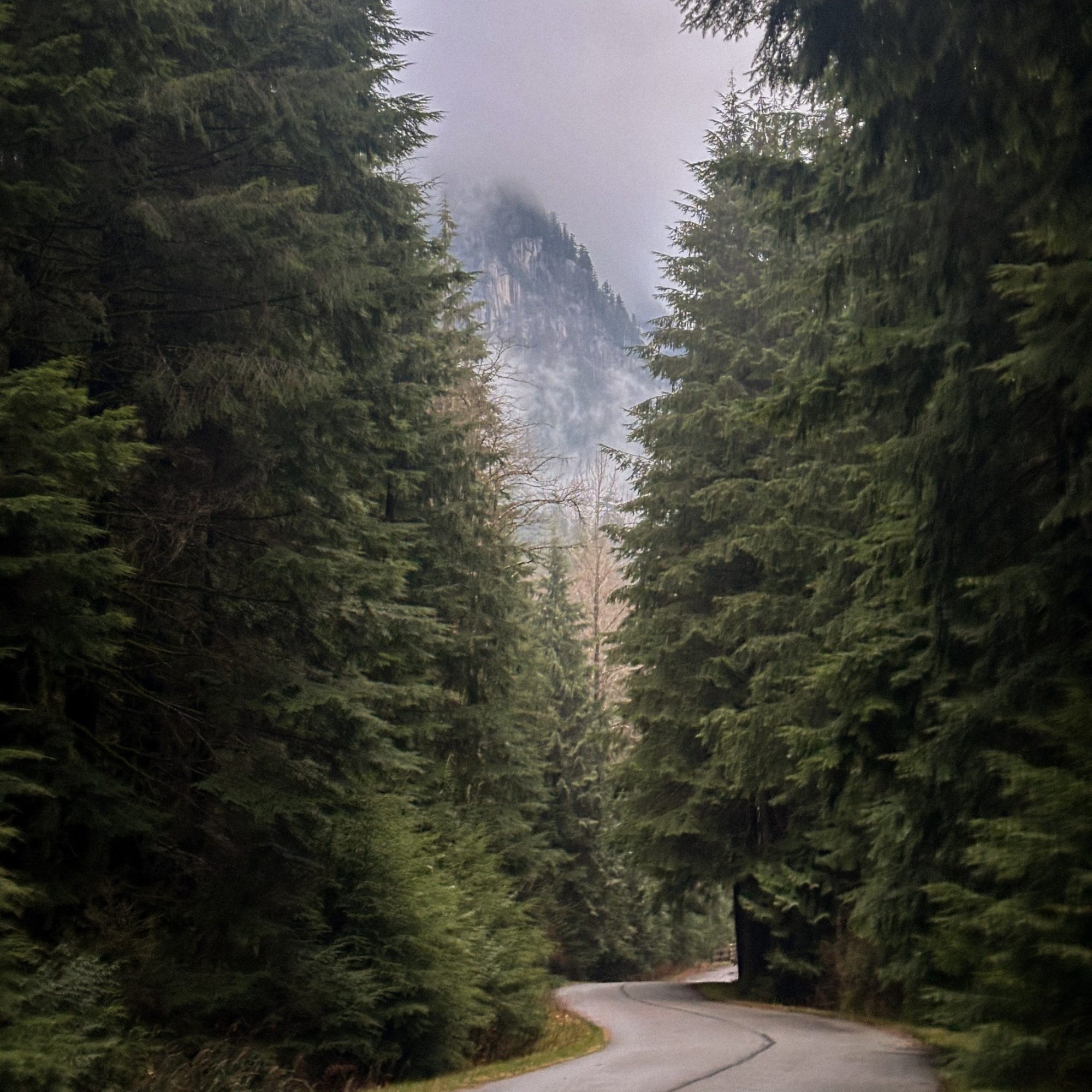
The same stunning mountains I had once seen emerging from the evergreen forests of North Vancouver, with their snow-capped peaks disappearing into the misty clouds that hung around them like crowns. They had been a patient presence through all those years of rushing, measuring, achieving, and chasing whatever seemed most important next.
I had simply stopped noticing them.
None of this happened all at once, and certainly not with taking off my watch. Long before I understood the extent to which I had come to measure my life, there were moments when I began to question what I was doing.
I think about those rides through the Demo Forest, and all the hours I spent cycling through one of the most magical places I have ever lived, my attention so absorbed by some numbers on a screen that I could scarcely acknowledge what I had zoomed by along the way.
Eventually, although it hurt me to know that I was losing my segment dominance and the ride was not going to earn me a temporary digital crown on the orange app, I learned to slow down and stop to take pictures.
I snapped baby deer, holding my breath and quietly sneaking along the trail as they grazed. I once caught a bear buried in a bush at the side of the trail, oblivious to my presence in that of berries. I stopped for many a picture of the insistent way light completes its authority down to earth through the foggy evergreens, and the first kiss of snow on a plunging rock face that looks like a smeared watercolor soaring up violently to breathe into the heavens.
And it seemed always, just as I was getting into a good rhythm, I would notice a worm in need of rescuing. A worm who had crawled onto the trail after impending West coast rain, which now requiring me to slow down, turn around, and move it out of the way lest it be reduced to splatters by all those avid cyclists speeding along, unflinching and oblivious to notice all the beauty around them as they charged along in pursuit of their fleeting digital crowns.
Sitting still in the ache and awe alike, SJT