

We were born to do something. To create, to contribute, to collaborate. We were born to recognize and celebrate the face of our brothers and sisters in one another.
Yet we were raised - conditioned, shaped, molded - to hate those who don’t look, think, speak, or act like us. This is not normal, though increasingly, disturbingly, it is becoming common.
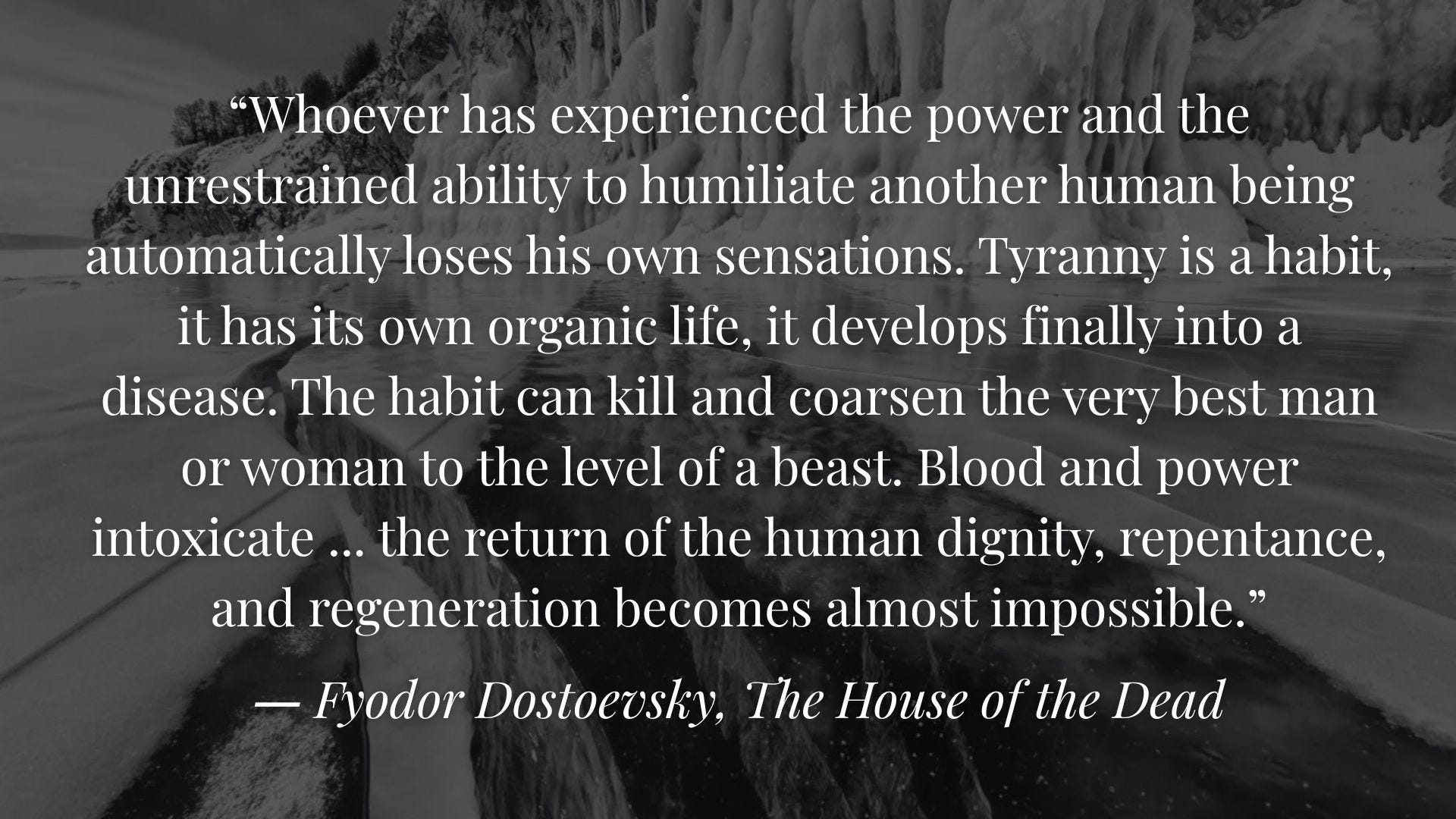
THE PARADOX OF DENUNCIATION
“I’m sorry, but I just can’t see past the fact that they did X, said Y, believed Z…”
In fact, you can. You simply choose not to.
The simplicity of choosing fear and hate, of righteously denouncing evil (as we should), feels safe and known. It requires nothing of us.
But what we avoid is the complexity, the nuance, the profound implications of inviting an opening - not an acceptance of evil that makes it permissible, but an acceptance of evil as an inescapable fact of living.
To acknowledge the contrast between what is inhumane and humane is to admit the duality that conflicts and rages within us all.
We have all stood at the edge of our own perverse atrocities. The truth, the difficult, humbling truth, is that we should be grateful we don’t fully know the conditions, both internal and external, which allowed the budding evil to grow, to eventually overtake the humane within, to dominate a soul until it was consumed.
Is such a soul redeemable? Perhaps not. But it is also not ours to condemn with such certainty. Human life is human life, no matter how inhumane it appears in this moment.
The devil, the demons, the forces of amorality - they exist.
To deny their existence is to remain naively unaware of their growing power within you. Your contempt, your rage, your hatred toward others are not protective shields. They are a billowing storm building within you.
And here lies the paradox: your very denial and denunciation of evil in others is precisely why it grows inside you, too.
Your repulsion is a mirror of your repression. The more violently you condemn what you see in others, the more deeply you deny what stirs - mostly dormant but slowly thawing - deep within yourself.
This is how nearly all callous, irreprehensible acts eventually overcome us. And when they do, in shock and dismay, in the harsh light of truth, we justify them to ourselves as “deserved,” as fair payback, as righteous retribution.
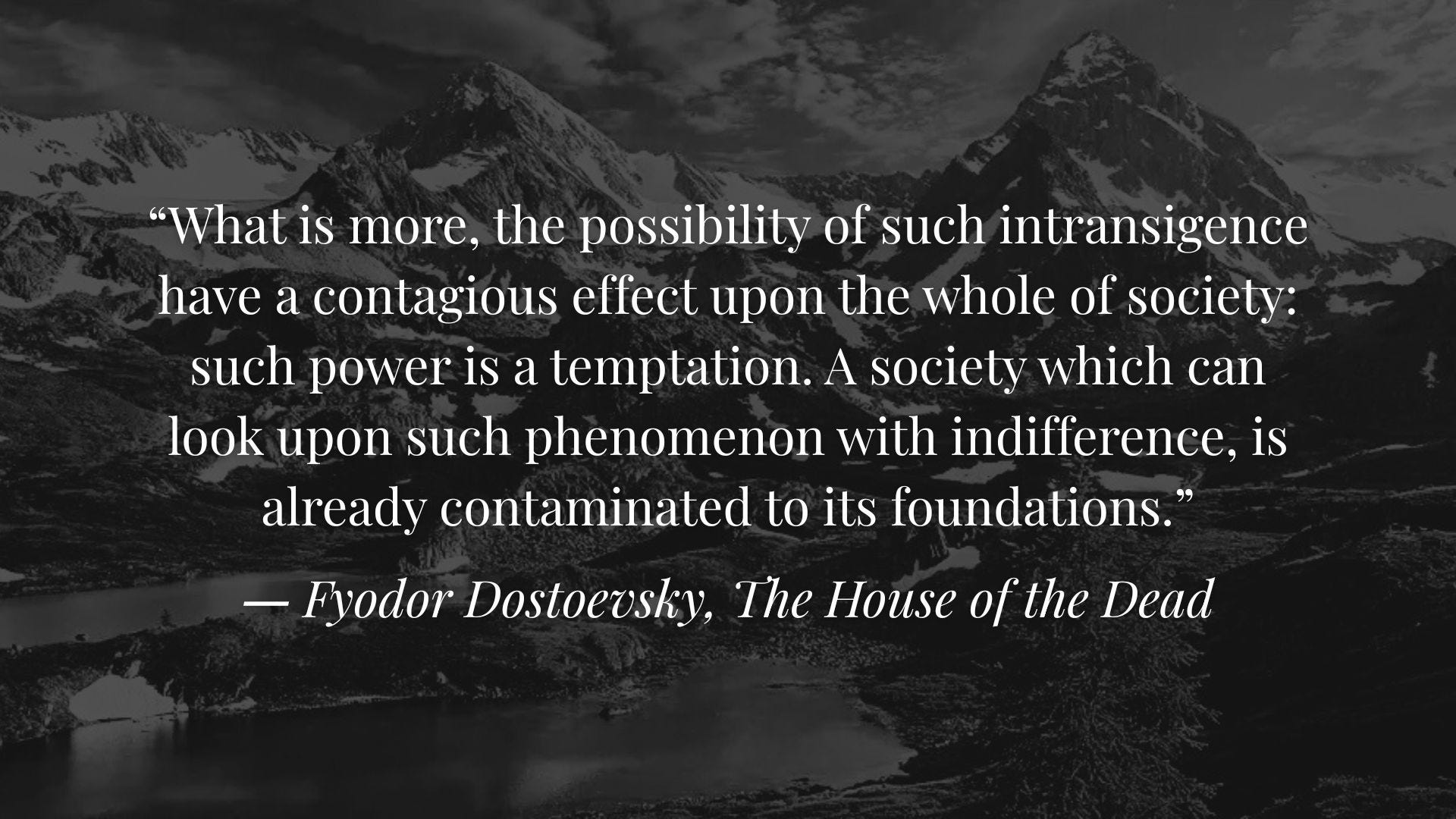
Do you not understand? This shows the strength of evil inside you.
Left unhealed - and as only bringing the light of acceptance to what is within can do - you risk being overtaken by a most grotesque and sinister monster.
You become a black soul clothed in a primed and polished body, a true Jekyll and Hyde. Eventually, you no longer even know how to return to love.
And even here, now, you - especially you - in your mold so alike the sinners you disdain have become a soul worthy of and in desperate need of love.
The point you miss is that multiple things can be true at once.
Truth, much like people, is neither all one thing nor another. If you cannot at least try to see the multitude of shades that pervade the whole picture, you will always escape the multiplicity and complexity of a clearer reality.
It’s never that simple. You’ve eschewed the evil for so long that you’ve finally, inevitably, become it yourself.
WHAT YOU RESIST PERSISTS
Do not adapt to evil. The most monstrous ability of human nature is our capacity to adapt - but to what?
Rarely do we decide for ourselves.
Rarely do we control the stimulus.
And so we slip, almost unconsciously, into performative shadows, becoming well-adapted robots, agents of dysfunction perfectly adjusted to a profoundly sick society.
May the commodification of human morality never adapt you to its twisted logic.
What you avoid, you accept.
What you deny, you confirm.
What you hide, you give power over you - power that grows in hibernation, ready to sprout its evil blooms at the first thaw.
What you resist persists, ever running in the subliminal background, increasing its insistence to live out loud in the horrendous reality of your own making.
THE FALSE PROMISE OF UNIFORMITY
All is not one.
We’ve dismantled community in the guise of championing individuality, and in doing so, we’ve lost individuality among the masses of conformity.
The irony is brutal: in trying to become more ourselves, we’ve become more like everyone else.
I wish we could all see ourselves the way others do.
Would we like what we see? Would we want to know the true interpretation of ourselves through the eyes of another? Could we bear it? Accept it? Or would it destroy us as the candid reflections of Arthur ruined Marilyn? Or perhaps exalt us, making us drunk on our own self-illusions of grandeur?
All is not one. Nor do we want it to be.
Homogeneous culture is what kills crops. Diversity is the common people’s advantage over systems of power, yet they’ve stripped that away too, in the guise of tolerance versus acceptance versus integration, words that sound progressive but often serve as linguistic sleight of hand.
We only have individuality in differences, not in an amalgamation of sameness.
Out-groups have more identity than in-groups; they are united by a common struggle for existence, bound by shared adversity rather than shared comfort. This is not a call to tribalism, but a recognition of what gives human identity its texture and meaning.
THE RAGE OF COMFORT
We need meaning. We need purposeful work. There is an irritability that comes from excess comfort in a biological system designed for adaptation. Without adequate stimuli, without challenge, we create our own. We succumb to the rage of comfort.
The cost of convenience is an unsettled conscience.
This is the great unspoken truth of our age: the most angry and indignant people are often those with the most provided comforts - comforts unearned - versus those who worked for theirs or have none at all.
Walk through any struggling neighborhood, and you’ll find less manufactured outrage than in the climate-controlled halls of privilege. Anger requires energy, and those expending energy on survival have none to spare on performative fury.
The goal, then, is never to get comfortable. Chase the challenge. Pursue the struggle. Create the drama as the protagonist of your own life, lest you get caught, inevitably, in the raging crowds of everyone else’s manufactured crises.
We’ve become mollycoddled and capricious. Now we’ve got nothing to do in a prison of our own making, an entrapment born of idleness.
We assume the role of seeing order where there is none, imposing morality without understanding. Talking too much, and talking the loudest - these are signs of hurried thoughtlessness, hallmarks of uncertainty masquerading as insight.
A mouse walks itself into a trap. Some justify it, coming to love their prison, and defend its walls. They’ll argue that their cage is freedom, that their chains are enlightenment, that their paralysis is choice.
Idle minds with too much borrowed comfort have created a world of morally oppressive spitefulness, animosity, endless fighting, blaming, envy, and fault-finding.
The unemployed soul seeks self-imposed meaning in the misery of others.
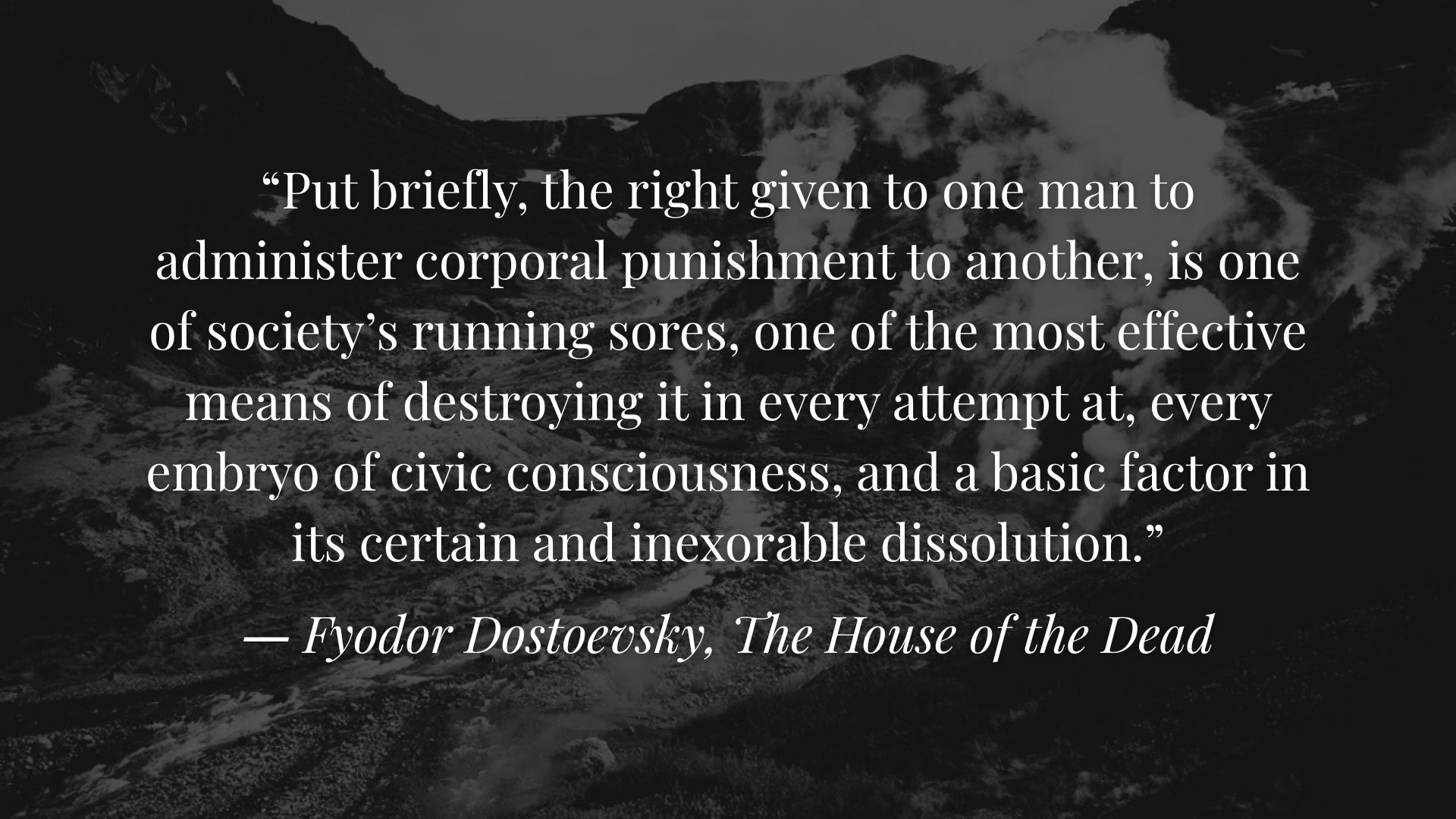
THE SENTENCE WE HAVE IMPOSED
We sentenced ourselves to online prison, to intellectual jail, to emotional confinement. We perform penal service of a pointless nature, devoid of meaning.
Entire generations succumb to self-subjected suffering, pain of our own design, torment we’ve willingly embraced.
The screens became our wardens.
The algorithms became our routine.
The notifications became our roll call.
We built the institution and appointed ourselves both prisoner and guard, playing out the same Kafkaesque absurdity day after day, year after year.
Will we ever get back to our own part of the world again? And would we even want to?
The question lingers, unanswered, as we scroll through another manufactured outrage, another borrowed opinion, another comfortable cage we’ve built with our own idle hands.
The door has always been unlocked. We simply refuse to turn the handle.
𓂀 In reflection and reckoning, alongside you, SJT
In dedication to the literary masterpieces The House of the Dead by Fyodor Dostoevsky and Dr. Jekyll and Mr. Hyde by R.L. Stevenson, which inspired this reflection, with the gentle reminder that if the prison of the online world grows too confining, you can always pick up a book.