

The sun rises, and sets, only to rise in the same place again. As we, the people, wake to sleep to wake in the same place again, and still, the sun also rises.
But where does it go each time that it sets? And indeed, for all our science, where do we go when we fall asleep?

For all our material vanities, there must be some invested purpose to going round and round and round.
After all, a life without purpose has no meaning, so we ascribe more imposing and inflated importance to our titles, employment, possessions, relationships, with decreasing consideration for who we are.
What we are reigns dominant and in such a light, the sun indeed, does rise, set, and rise again in the same place, day after day, as we collect more labels, titles, experiences, memories, and money.
But is this where meaning lives? In the accumulation of the external? A shallow, broad life is the price of a soul in poverty. Surely not.
Then perhaps a spiritual life—rich, deep, sincere in its steadfast devotion—is more meaningful, we may assume.
But is it? If connection to our creator is all we seek, then why are we here at all?
Why embodied?
Why physical?
The mind-numbing rotation of superficial existence lacks meaning, yes, but the pure spiritual pursuit seems to lack a definite purpose to human existence beyond somehow escaping the flesh-bound nature of the soul confined to Earth. Even in our most fanatical of devotions, we remain here, physical, cycling through days.
Is the desire and entanglement with the fleshly world not then what we came here to do? To live a day, to die each night in unconscious slumber, only to rise and live again with all our ignorance, innocence, and unaccumulated experience tomorrow?
Perhaps. But this too feels incomplete; merely satisfying carnal, physical pleasures of the body, existing day in and out as we amble toward the same inevitable ending.
No, of course not. None of these alone.
For we are also deeply intellectual.
Built with an electrical advantage over the animal kingdom over which we preside and rule, we know morality and wield skill with which we coax knowledge from the mysterious.
We plan and vision and plot and solve galaxies of problems, both of this Earth and of our own inexhaustible making. The idle mind cannot be at ease to accept the non-meaning of such a rotational, fruitless existence. We pursue increasingly useful and meaningful work, each building on the shoulders of the gigantic minds before us in restless contribution of Something More.
Total world dominance came easily enough.
Mastery of the physical outer world carved its price on our hearts and indebted our occupations to the fixation of the realms of the interstellar—yes, that’s what our quick and rational intelligence was born to do.
And yet, we will never be satiated on intellect alone.
Alas, we are also profoundly mystical, spiritual, and some even devoutly religious. We embody spirit of this, there can be no doubt.
Many make their lives a living testimony of their spiritual journey, and the more we seek outside, the greater the calling to know that the infinite of the soul, access to the divine, the magical, the mysterious, in fact, resides within, inside each and every one of us. And even better, this touch of the divine is always accessible, available to us at any time. Hidden, yes, often and carefully so, for good reason.
Human nature is curious, restless, adventurous, and spirited. The explorers, the questioners, the seekers with unsatisfied hearts: these among you are old and powerful souls.
This yearning comes not from a place of lack but rather one of desire to know and to understand. To make whole with oneself and to cultivate true peace that radiates and ripples among our communities. For the truth that you meet inside of yourself is a worthwhile pursuit that transmits a playful continuance across generations of all peoples and builds in impact and importance as part of, not separate from, the Ever Eternal Earth.
Instead of being mere meek visitors here, we become part of the story: contributing stewards in co-collaboration and co-creation with the constant and enduring natural world. In her persistent, solid, stoic existence, we are not meaningless blinks on the long scale of brief existence but rather make a very sincere contribution to eternal, lasting truth.
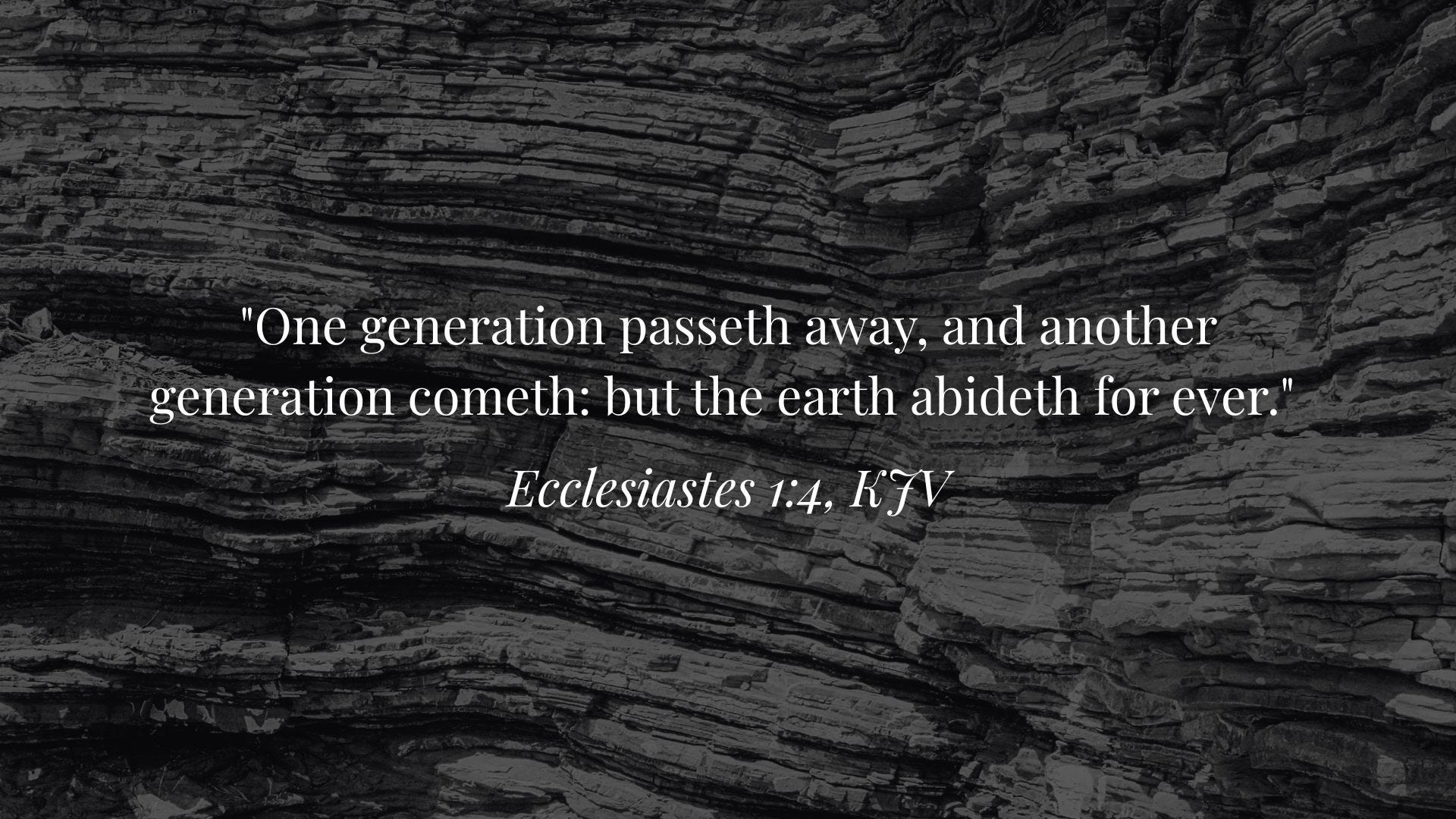
But how? How does daily repetition become eternal contribution? How do we avoid the trap of meaningless cycles that Ecclesiastes warns against?
The Endosymbiotic Answer
Consider endosymbiotic theory. Billions of years ago, larger primitive cells began engulfing smaller bacteria, likely trying to eat them. Most of these bacteria died. Digested. Forgotten. This happened millions upon millions of times: engulfment, death, oblivion; succumbing to the deafening decay of truly meaningless repetition.
But occasionally, rarely, something different happened.
A bacterium survived inside the host cell. Instead of being destroyed, it began producing energy. The host cell provided protection and nutrients. Over time, over millions of years of patient, persistent coexistence, they became so interdependent that neither could survive alone.
The bacterium became the mitochondrion. A permanent fusion. An irreversible integration.
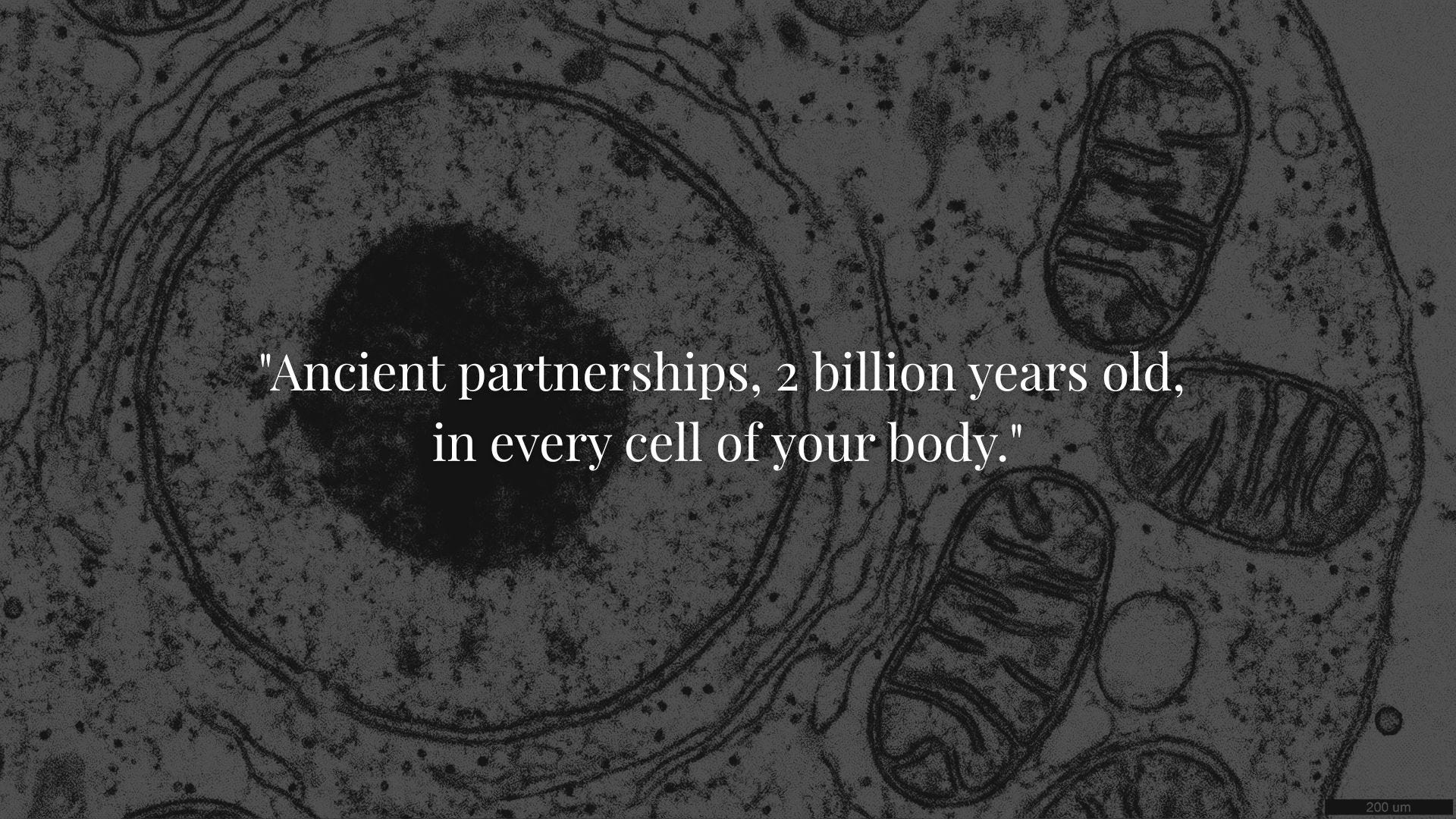
Today, every breath you take is powered by the descendants of those ancient bacteria.
They are in every cell of your body. You literally carry this ancient partnership within you. The bacteria did not know they were making history. They were simply surviving, adapting, existing day after day in their microscopic world. And yet their daily persistence, their endless repetition, created something that could never be undone.
This is not a metaphor.
This is physics and biology working in concert. Yes, the universe expands toward entropy and chaos. But life uses that entropy gradient to build local pockets of staggering complexity. The sun’s entropy increase is what powers photosynthesis. Decay and death fuel new growth. The cycle doesn’t oppose transformation; it enables it.
Most bacteria that got engulfed contributed nothing lasting. They died and were forgotten, truly meaningless. But the ones that persisted, that adapted, that found a way to integrate, they became infrastructure. Foundational and irreplaceable components of everything that came after.
Generations before us are not just swallowed up by the unyielding forces of time to be forgotten, a mere footnote in the annals of humanity to be subsumed by revisions of the new.
No. Like the endosymbiotic bacteria: we have co-evolved into a small, yet indispensable part of the greater story.
Ecclesiastes warns of endless repetition in the vain distraction of meaningless opulence.
Endosymbiotic theory reveals that although individual days may pass, the integration—the compounding effect—can create something new. Something that is greater than the sum of its parts. An invaluable, new, complex whole that cannot be separated back into its components.
Do we not literally carry ancient partnerships in every cell?
Are we not ourselves the compounded result of billions of years of integration?
Can not each of us then create something more enduring than One Human Life; something lasting in the collective narrative of humanity where old patterns are given new meaning and new application under the inevitable change of time, circumstance, and perspective?
What is unremarkable repetition today subtly reveals the transformative breakthrough tomorrow. Does the soft trickle of water not carve the mighty rock?
In this sense, individual life and indeed, the generations to which we each belong become, by law, immortal. Not only in the spiritual story but also in the physical.
By creating seemingly invisible threads, barely measurable momentum, setting the conditions for seemingly sudden surges and breakthroughs that burst from “nowhere,” we all, in some infinitesimal way, contribute to shifting the very fabric of existence as we have always known it.
And suddenly, the routine shifts and forever changes.
Indeed, there can be no turning back.
What You Touch
Life, therefore, is not meaningless repetition with no purpose as Ecclesiastes warns, or as Hemingway gloomily resolves. Rather, it is in fact the very same refined repetition—unconscious or intentional, it does not matter, we all play our part, willingly or not—that gives life its precious and rich value.
But here is the question that matters: the water that carves rock does so drop by drop, yes, but it must actually make contact with stone.
Your repetitions must touch something real.
The question is not WHETHER your life contributes, for physics guarantees it does. Energy cannot be destroyed, only transformed. Your existence ripples outward whether you intend it or not.
But the question that should wake you in the morning is this:
WHAT do you contribute?
What do you touch?
Shallow repetitions on the surface of life create shallow grooves. Going through motions, accumulating possessions, performing roles without presence—these are the material vanities Ecclesiastes rightly dismisses. They change nothing and no one, least of all yourself.
But deep, sincere engagement, even in mundane daily acts, can carve canyons.
The bacteria that became mitochondria weren’t performing shallow repetitions. They were doing what was necessary to survive: processing energy, adapting to their environment, responding genuinely to the reality they faced. Their repetitions had contact. Had consequence. Had truth.
So too with human life. Your daily repetitions become transformative when they make genuine contact with:
Real pain - yours and others’, faced honestly rather than numbed or avoided
Real love - not performance or transaction, but actual vulnerable connection
Real challenge - problems that demand you grow, that stretch your capacity
Real truth - what you discover when you turn inward and face yourself without flinching
This is what it means to “meet life when we meet it.” Not to sleepwalk through routines. Not to hide behind roles and labels. But to show up, present and sincere, to what is actually before you.
The truth that you meet inside yourself, this is not separate from your contribution to the world. It is the very substance OF your contribution.
When you touch your own genuine nature, your own deep truth, and bring that into contact with the world day after day, you create grooves that cannot be erased. You become part of the infrastructure that future generations build upon.
You don’t need to know you’re making history. The bacteria didn’t know. You simply need to be present. To engage sincerely. To let your repetitions have weight and contact rather than skimming the surface.
This is the creative, compounding effect of the universal, inevitable pursuit of life on Earth as embodied human BEINGS. Not human doings. Not human performings. Beings.
The way we live, the risks we take, the love we give, the pain we face, the challenges we overcome—these become our lasting contribution. Life, after all, meets us when we meet it.
The Canyon Reveals Itself
The sun also rises, yes. But we are not merely watching it; we are part of what determines where it rises tomorrow. Not through grand gestures alone, but through the patient, persistent, sincere engagement with what is real.
The bacteria that became mitochondria didn’t know they were making history. They were just surviving, adapting, integrating. And yet, billions of years later, their descendants power every breath you take.
Your life—this one, ordinary, extraordinary life—is the same. You are simultaneously insignificant and irreplaceable. A single drop and the carving force. The repetition IS the transformation, but only when it makes contact with something true.
So live as you wish. Thou Mayest.
Live loudly outside the confines of the norm or well within the duty of routine. But live with presence. Touch something real. Let your repetitions have weight. This you must.
For you are not separate from the cycles; you are a contributing force within them. Your sincere engagement, repeated day after day, becomes the very substrate that future generations integrate. They will not know your name. They will simply inherit the canyon you carved, the complexity you contributed, the truth you touched.
So the question Ecclesiastes and Hemingway never quite asked is this:
What will you touch?
What will you carve?
What truth within yourself will you bring into contact with the world, day after day, until the canyon reveals itself?
The sun also rises.
And so must you.
This is your legacy.
𓁹 Rising and setting and rising again, alongside you, SJT
- In dedication to the first work of classic literature I ever read, Ernest Hemingway's The Sun Also Rises and Ecclesiastes, which together ask whether our daily lives hold meaning, with the gentle reminder that the sun rises not despite the repetition, but because of it, and so do you. And to Lynn Margulis, whose brilliant scientific contributions demonstrate such immortality and invite a new perspective on repetition itself; that what persists can transform, and what integrates, endures.